
Back
- Welcome
- About this Report
- Approach to Sustainability
- Our Sustainability Agenda
- Respecting Nature
- Serving Our Stakeholders
- Customers
- Our people
- Partners
- Community
- ESG Data Hub
- Financial information
- Climate change
- Environment
- Customers
- Customer portfolio – CLP Power Hong Kong Limited and EnergyAustralia
- Electricity delivered – CLP Power Hong Kong Limited
- Availability and reliability – CLP Power Hong Kong Limited
- Customer satisfaction – CLP Power Hong Kong Limited and EnergyAustralia
- Fuel use
- Generation and energy storage capacity
- Energy sent out
- Our people
- Employee headcount and type
- Contractor FTE and type
- New hire
- Total staff turnover rate
- Voluntary staff turnover rate
- Employees eligible to retire within the next five years
- Percentage of employees trained
- Average training hours per employee
- Training hours dedicated to upskilling and reskilling
- Gender distribution of Group Executive Committee (GEC) members
- Gender distribution of employees
- Gender diversity progress
- Group safety performance – Employees
- Group safety performance – Contractors
- Group safety performance – Employees and contractors combined
- Partners
- Community
- Glossary
- Downloads
- Case studies
- Materiality Assessment
- Feedback Form


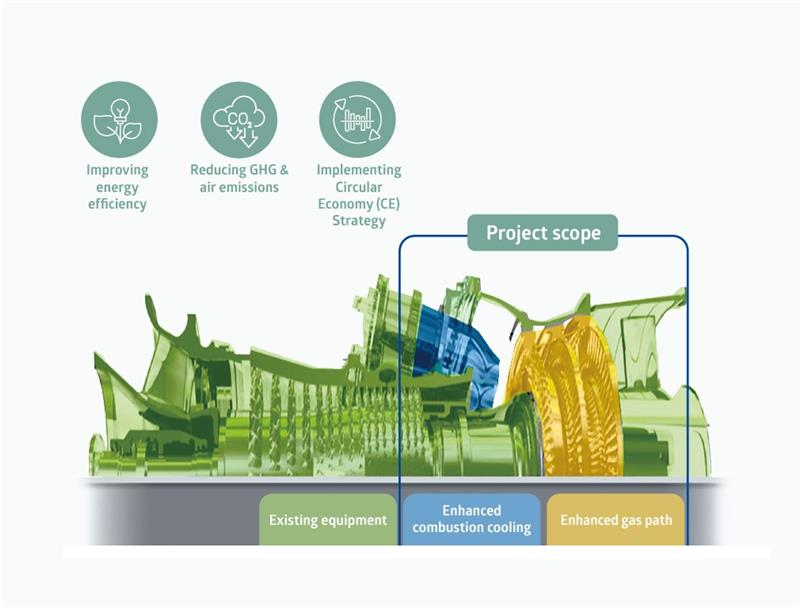
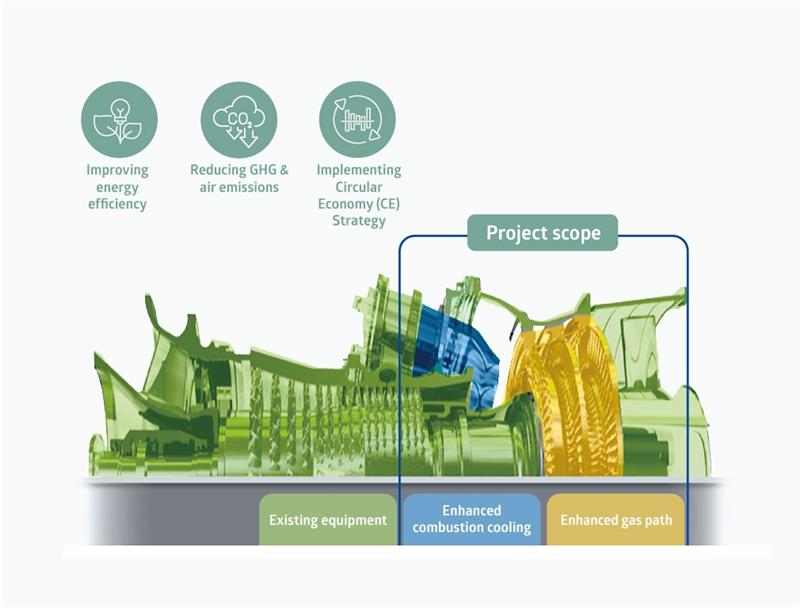 Scope of the gas turbine enhancement project, and projected environmental benefits