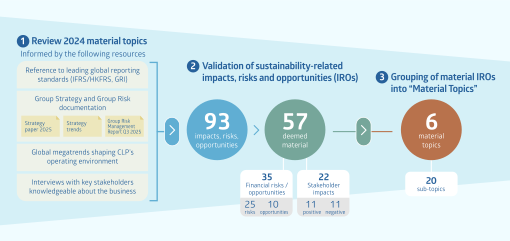
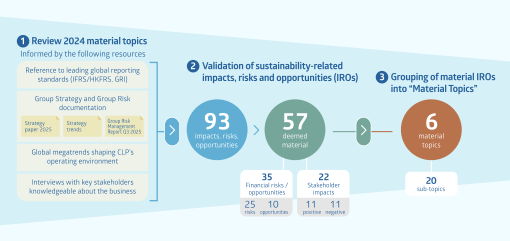
Materiality assessment is an essential process for identifying and prioritising the sustainability-related risks, opportunities and impacts that are most relevant to CLP’s business. The results guide CLP’s strategic decision-making and reporting, reinforcing the Group’s commitment to transparency and resilience in a rapidly changing global environment. A summary of the detailed results is provided below:
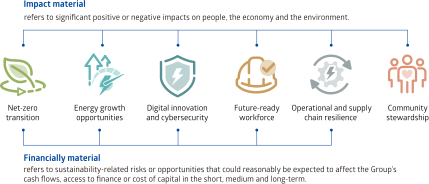
The materiality assessment findings are consolidated into six key material topics, with five identified as financially material and six considered impact material, respectively.
How to navigate sustainability-related disclosures for investors and other stakeholders
The double materiality approach streamlines the disclosures in the Annual Report and Sustainability Report. The material topics and associated CLP responses are summarised in this section and the Managing What Matters to Our Business chapter of the Annual Report.
The materiality assessment results are summarised in the materiality matrix below, showing the relationships between megatrends, material topics and relevant sub-topics. Assessment of time horizons and position in the value chain were incorporated in the results.
Strengthening cybersecurity and data protection measures
Cultivating agile ways of working
Fostering inclusion and diversity
Promoting safety, health, and well-being
Upskilling and reskilling employees
Ensuring resilient operations and supply chains
Ensuring thriving communities
MATERIALITY ASSESSMENT
Materiality Matrix
This interactive map shows the results of the double materiality assessment.
Click on a megatrend to read more and see how it relates to other material topics.
Click on a material topic or sub-topic to find out the linkages between them, why they are material in financial and/or impact terms and where to read more
Click on a filter to find out the material topic, value chain and time horizon of each material topic or sub-topic. You may select multiple filters at a time.
MEGATREND
Distributed energy
Energy systems are decentralising, reshaping economies and democratising global access to energy. Main drivers for the shift include advanced technologies, Virtual Power Plants (VPPs), and locational pricing. Consumers are increasingly seeking more control over their energy use, driving demand for decentralised solutions, and opting for a more responably priced and personalised energy system service. Traditional utilities must innovate, adopt new technologies and redefine their roles.
MEGATREND
Nature loss
The accelerating loss of species and habitats threatens productivity, exasperates social challenges and elevates operational risks. Over half of the global GDP is highly dependent on nature and the ecosystem services it provides. Utilities are exposed to risks driven by nature loss and compounding effects of climate change with many plants being situated near shorelines to secure access to water for cooling purposes. In response to biodiversity loss, investors demand on standards for nature risk assessments and reporting, promoting companies to make stronger commitments to biodiversity and ecosystem preservation. As the energy transition drives demand for critical minerals and strains habitat, businesses are adopting circular designs for clean energy products – emphasising durability, reusability, repairability and recyclability.
MEGATREND
Electrification
Demand for electricity is expected to grow as cities, transport systems and industries electrify in line with economic development and population growth. With advances in economies brought upon new use purposes for electricity uses such as EVs, heat pumps and AI technology. To meet the rising demand of energy generation, upgraded and expanded grids are crucial to fully realise the benefits of rapid renewable energy growth and will require significant investment and digital solutions.
MEGATREND
Decarbonisation
The energy sector urgently needs to shift from being the largest emitter to leading the global effort to achieve net-zero emissions, in support of the transition unprecedented investments. Global clean energy investment needs to triple to $4 trillion annually by 2030. While global renewable energy capacity continues to grow but remains China-centric. Companies internationally face increasingly stringent disclosure obligations due to rising investor demand for climate-related information. In addition to transitioning, climate-driven extreme-weather events have become more frequent creating operational and financial impacts for the energy sector.
MEGATREND
Disruptive technologies
Artificial intelligence (AI) developments advances technology in various industries. In utilities, AI optimises distribution, improving grid performance an driving the evolution of smart energy infrastructure capable of managing both the transition and rising energy demand. However, oil and gas majors as well as tech giants are new market entrants that may one day leverage their financial clout and technology expertise, innovating and reshaping how energy is produced, distributed and consumed. Consumers are empowered by new digital technologies and desire a personalised energy solutions to emphasise customer service, convenient and engagement such as managing costs and tracking their environmental impacts.
MEGATREND
Geopolitics and supply chain resilience
Intensifying geopolitical tension may complicate efforts to secure power generation technologies. Structural deficits are driving a shift from four decades of neoliberalism to greater government intervention, with profound implications for business. Growing protectionism also underscores the need for utilities to diversify supply chains and leverage local or regional innovation. Global conflicts in Russia and Middle East are destabilising energy markets, complicating efforts to ensure reliable and affordable fossil fuel supply.
MEGATREND
Changing societal expectations
Societal expectations are set to change with shifting demographics leading to global energy demand. Expected factors of population growth, urbanisation, and the rise of huge middle classes in China and India, whose energy-intensive consumption patterns are increasingly mirroring those of the West. The cost-of-living has escalated concerns around energy equity, creating more pressure on utilities and governments to ensure accessible, reasonably priced and clean energy for all. Consumer expectations are also evolving, with a growing preference for personalised and sustainable energy solutions. Building trust and offering tailored solution emphasising on affordability, sustainability and reliability will reduce the consumer’s concerns on greenwashing complaints.
MEGATREND
Data use and security
Customer data breaches have become a recurring headline with cyber attacks becoming increasingly sophisticated. Utilities, specifically smart grids, face heightened risks due to expanding digital vulnerabilities. In protection of customer data breaches, stricter data privacy regulations are thus imposed, restricting utilities’ capacity to leverage customer data for product and service innovation. Governments are strengthening its cyber operations to ensure the prevention of data stealing or disruptions to critical infrastructures.
MEGATREND
Future of work
Ongoing labour shortages and the rise of AI highlights the shrinking labour pool necessary in the energy sector. Growth in AI requires employee retraining to address the skill gap and improve productivity. Furthermore, complications in attracting and retaining talent is also impacted through younger employees’ expectations for purpose and meaning in their work. Companies that embrace a diverse, equitable and inclusive workplace, flexible work arrangements and purpose-driven work are likely to see higher employee satisfaction and retention.
MATERIAL TOPIC
Net-zero transition
CLP is transitioning to low-carbon energy by phasing out coal, investing in non-carbon energy infrastructure, and strengthening climate and nature risk management. The transition creates opportunities in renewable energy, transmission, distribution and energy storage. In line with Climate Vision 2050, CLP is committed to achieving its decarbonisation targets while supporting employees and communities impacted by the energy transition, maintaining energy reliability and affordability and adapting to regulatory uncertainties.
FINANCIALLY MATERIAL
CLP must balance its substantial investments in grid modernisation and renewable energy integration against potential market-specific risks. These include, for example, delays in phasing out coal-fired plants that could lead to regulatory penalties and higher emissions-related compliance costs, as well as exposure to emerging carbon pricing mechanisms. Extreme weather events are increasing infrastructure repair costs and insurance premiums. Together with growing regulatory scrutiny of industry impacts on nature and biodiversity, these trends highlight the need for proactive risk management. Opportunities exist in battery storage, virtual power plants, and green energy technology investments that can enhance grid reliability and generate new revenue streams. Successfully navigating these challenges while meeting emissions targets is critical to maintaining stakeholder trust and preserving CLPʼs market position. Failure to do so could lead to reputational damage, regulatory penalties, and delays in capital investments, hindering competitiveness in an evolving energy landscape.
IMPACT MATERIAL
By improving air and water quality management, CLP helps protect community health and natural ecosystems, especially in water-stressed regions. Investments in climate-resilient infrastructure and grid improvements enhance energy reliability for customers and communities. CLPʼs expansion into sustainable energy solutions, including solar installations, nuclear energy, and electric vehicle charging, provides a larger share of zero-carbon power to consumers. In addition, CLPʼs extensive consumer data sets can help establish benchmarks and guidance for the decarbonisation of real assets at a city scale. These efforts collectively strengthen CLPʼs reputation, build trust with stakeholders, and contribute to social equity and long-term economic resilience in the regions it serves.
MATERIAL TOPIC
Energy growth opportunities
CLP is focused on providing reliable, sustainable energy as demand grows through electrification and digitalisation. It is well-positioned to capture new energy growth opportunities through investing in lower-carbon and digital energy infrastructure, developing customer solutions such as EV charging and Energy-as-a-Service (EaaS), and capturing international market opportunities. These efforts support decarbonisation, energy affordability and long-term competitiveness in an evolving market and regulatory landscape.
FINANCIALLY MATERIAL
Rising global electricity demand presents significant growth opportunities for CLP. However, regulatory uncertainties could impact profitability. Evolving net-zero policies may accelerate coal plant closures and increase transition costs, affecting CLPʼs operations, investment decisions, and transition timeline. High energy bills could lead to customer dissatisfaction, reinforcing the need for affordable energy solutions. CLP must also continually adapt to an energy ecosystem experiencing ongoing technology-driven disruptions, with particular consequences in more competitive global markets. Despite these risks, CLPʼs expertise in electrification and renewables positions it to capitalise on growing demand for low-carbon electricity, including in Asian and broader global markets. This creates new revenue streams in sectors such as transport and EV infrastructure. Leveraging Chinese supply chain relationships could help reduce project costs and expand CLPʼs market share in Mainland China and other markets.
IMPACT MATERIAL
By improving energy affordability and reliability, CLP contributes to community well-being and economic stability, particularly in urbanising regions. Adapting to regulatory changes is essential for maintaining market position and ensuring reliable energy services. CLPʼs efforts to build a closed-loop EV ecosystem, including taxis and personal vehicles, advance cleaner transportation solutions that promote community health and align with national decarbonisation goals. Expanding into new markets fosters economic growth by creating jobs. These efforts enhance CLPʼs reputation as an energy-sector innovator and trusted partner in the transition.
MATERIAL TOPIC
Digital innovation and cybersecurity
CLP is prioritising digital innovation to improve operations and provide smarter energy services while strengthening cyber resilience. It is continuously enhancing its digital capabilities to become a data-driven and secure utility. Digitalisation is crucial for transforming the energy sector. Continued investment in digital capability, governance and training, and responsible consumer data analytics and use of emerging technologies such as Artificial Intelligence (AI), enables CLP to create a more efficient, resilient, connected and customer-centric business.
FINANCIALLY MATERIAL
CLPʼs digital innovation initiatives offer opportunities for cost efficiencies through AI-driven network diagnostics and smart grid infrastructure, the development of innovative services to support improvements in customers’ energy efficiency, and the capacity to accommodate the growing energy demands of new technologies. However, these digitalisation efforts come with inherent risks, including potential implementation challenges, scalability issues, and the possibility of not meeting customer expectations. The increasing threat of cyber attacks could disrupt operations. The integration of smart grid and other digital technologies has the potential to heighten this threat, exposing CLP to regulatory penalties and significant financial losses. CLP also faces rising costs for cybersecurity investments and compliance with stricter data privacy regulations, which add to operational complexity. Failure to manage the implications of AI for employees may result in job displacement and skill gaps, jeopardising workforce stability. To safeguard its financial performance and reputation, CLP must balance technological advancements with robust cybersecurity measures and comprehensive risk management.
IMPACT MATERIAL
Investing in cybersecurity is crucial for CLP to protect its infrastructure and customer data, which is essential for maintaining trust and reliability among consumers and regulators. By integrating AI and digital technologies, CLP can enhance grid efficiency and empower customers with improved energy management tools, offering cost savings and greater control over their energy use. Investments in smart grid infrastructure and energy storage provide scalable solutions that accommodate emerging technologies and support the integration of renewable energy sources, benefiting both the environment and customers. However, CLP must carefully manage the potential for job displacement and skill gaps resulting from technological advancements to avoid negative social impacts.
MATERIAL TOPIC
Future-ready workforce
CLP is dedicated to making its workforce safe and future ready by attracting, developing and retaining diverse talent; upskilling and reskilling employees; fostering an agile, inclusive culture and ensuring its workplaces are safe and welcoming for all. Continuous investment in training and development and in process and policy improvements, enables CLP to attract top talent, innovate to seize opportunities and maintain a high-performing workforce.
FINANCIALLY MATERIAL
Attracting and developing talent is essential for CLP to capitalise on the financial opportunities associated with the transition to a digitally enabled, low-carbon future. By focusing on upskilling and reskilling, CLP addresses talent gaps while enhancing capabilities in new areas critical for growth. Adaptation to new, digitalised ways of working will be essential to achieving CLPʼs broader strategic goals. Promoting safety, health, and well-being supports operational efficiency and reduces costs associated with workplace incidents. Fostering diversity, equity, and inclusion strengthens CLPʼs employee value proposition, helping to attract and retain productive talent, particularly younger workers. Cultivating an agile organisational culture enables CLP to adapt quickly to market changes, fostering innovation and improving competitiveness.
IMPACT MATERIAL
Ensuring workplace safety and upholding high labour standards are essential for the well-being of employees, contractors, and service providers. Promoting diversity, equity, and inclusion, and extending access to staff feedback mechanisms across CLPʼs wider workforce ecosystem, will support well-being and social mobility by providing more development opportunities and greater transparency. Effective upskilling and reskilling initiatives enhance employee satisfaction and performance. Cultivating an agile organisational culture fosters innovation and open communication, improving employee engagement and retention. However, failure to adequately prepare employees for the energy transition and ongoing digitalisation could lead to job insecurity and negative community impacts.
MATERIAL TOPIC
Operational and supply chain resilience
The accelerating pace of environmental, technological, regulatory and social change globally has reinforced the importance of business resilience. CLP recognises the strategic value of secure and responsibly-managed supply chains. Continued investment in resilience enables CLP to anticipate, withstand and recover from disruption, ensuring reliable operations and sustainable value creation.
FINANCIALLY MATERIAL
Geopolitical dynamics and rising protectionism could impact CLPʼs operations by increasing the costs of energy and complicating access to critical technologies. This may create immediate financial risks and potentially delay CLPʼs decarbonisation initiatives across its markets. As global policies evolve, CLP is actively exploring diverse technology partnerships both in Mainland China and internationally to bolster its operational resilience and innovation capacity. Regulatory considerations in certain markets may affect project timelines, while disruptions in regions such as the Middle East, Europe, or Asia could influence fossil fuel supply and maritime trade routes, leading to increased costs and potential customer impacts.
IMPACT MATERIAL
As global supply chain uncertainty persists, CLP will need to continually monitor human rights and environmental risks and work with suppliers to demonstrably address these. CLPʼs size and reputation are an asset in this regard, enabling it to collaborate with suppliers to identify and address potential and actual risks, in line with market-specific regulations and voluntary industry standards.
MATERIAL TOPIC
Community stewardship
CLP recognises its obligations to meet evolving stakeholder expectations around the positive role businesses should play in society. This includes demonstrating leadership in its decarbonisation ambitions, investing in reasonably priced and resilient energy infrastructure and stewarding positive social impact through its operations, including supporting employees and communities impacted by the energy transition.
IMPACT MATERIAL
Business activities that meet stakeholder expectations benefit people, especially customers, suppliers, and local communities. By addressing education, womenʼs empowerment, social inclusion, diversity, and energy poverty, CLP enhances the well-being of local communities and supports socio-economic development. Group expertise in building resilient energy infrastructure helps communities adapt to climate change, ensuring reliable and sustainable energy access. Conversely, failing to provide a just transition for employees affected by the closure of coal-fired power plants could result in negative economic, health, and social impacts for workers, their families, and communities.
SUB-TOPIC
Accelerating decarbonisation efforts
CLP is leveraging growing support for nuclear energy to increase its share of zero-carbon power, while progressively phasing out coal-fired plants. This strategy aims to balance the need for reliable, low-carbon electricity with the challenges of managing carbon pricing exposure and ensuring capital investments in decarbonisation are aligned with local market needs.
FINANCIAL RISK
Misaligned capital allocation with market-specific energy needs and decarbonisation pathways could hinder CLP’s transition from fossil fuels to non-carbon energy assets, potentially resulting in stranded assets, diminished asset value and erosion of investor trust.
FINANCIAL RISK
Exposure to carbon pricing mechanisms may increase CLPʼs costs and affect financial performance if carbon prices rise significantly.
CLP can leverage growing public support (in Hong Kong and overseas) for nuclear energy as part of a sustainable energy mix. This would include an extension of existing plantsʼ life or the establishment of new nuclear power plants, and provide a larger share of zero-carbon power to consumers.
NEGATIVE IMPACT
A delay in CLPʼs phase-out of its coal-fired plants will result in ongoing carbon emissions and air pollution.
CLP is committed to improving environmental performance and managing nature-related risks by reducing air and water pollution, preventing contamination and strengthening biodiversity safeguards. These efforts support regulatory compliance, protect ecosystems and communities, and maintain access to sustainable finance.
FINANCIAL RISK
Regulatory penalties and public health concerns may result from inadequate control of air emissions, wastewater discharges and hazardous waste.
FINANCIAL RISK
Investors are placing increasing expectations on nature- and biodiversity-related management. Failure to keep abreast of the evolving requirements may affect CLP’s access to finance and cost of capital.
Excessive water and/or air pollution as a consequence of CLPʼs operations could lead to environmental damage, especially in regions with high water stress, with impacts for ecosystems and communities.
NEGATIVE IMPACT
Significant damage to natural ecosystems (e.g. potential seepage from ash repositories leading to surface/ground water contamination (EA)) that may require serious mitigation.
CLP is focused on enhancing grid resilience and flexibility to support the clean energy transition. This involves addressing inadequate infrastructure and integrating distributed energy resources, which are crucial for maintaining reliability and energy access.
FINANCIAL RISK
Ageing and insufficient grid infrastructure may pose constraints on the distribution of energy from CLP invested assets, including renewable energy and batteries, resulting in revenue loss, potentially affecting reliability and slowing the energy transition.
CLP faces increasing risks from climate-related extreme weather events and changing natural conditions that can disrupt operations and damage infrastructure. Enhancing resilience through adaptation planning and asset hardening is essential to safeguard reliability, manage insurance costs and maintain long-term operational efficiency.
FINANCIAL RISK
CLPʼs energy infrastructure assets face extreme weather risks, including extreme heat, storms, heavy rainfall, landslides, and water stress, which can damage assets and disrupt services, potentially impacting financial performance.
FINANCIAL RISK
CLP’s operations are dependent on stable natural resources including consistent wind patterns and reliable access to water for cooling. Shifts in these climate variables may potentially affect asset performance and increase costs over time.
CLP is strategically expanding its offerings by developing new products and services that leverage growing demand for low-carbon, digital and distributed energy solutions. This includes end-to-end offerings such as rooftop solar, battery storage, EV charging and virtual power plants, supporting grid flexibility and accelerating the clean energy transition.
FINANCIAL OPPORTUNITY
Investments in low-carbon energy technologies will strengthen CLPʼs credentials on decarbonisation and increase trust from customers and investors.
FINANCIAL OPPORTUNITY
New business opportunities can be generated by deploying virtual power plants to improve grid flexibility, optimise renewable energy and reduce reliance on fossil fuel generated electricity.
FINANCIAL OPPORTUNITY
CLPʼs expanding battery storage portfolio enhances energy supply reliability and supports more flexible energy dispatch in response to demand fluctuations.
FINANCIAL OPPORTUNITY
Economic affluence in Asia and digital transformation to continue driving demand for low-carbon energy from consumers and industrial sectors such as data centres and electric transport. This creates opportunities for providers of end-to-end solutions including rooftop solar, home batteries and EV charging.
As renewable energy infrastructure comes to the end of its lifecycle, there will be opportunities for remanufacturing of industry machinery, reducing waste and conserving resources.
CLP is committed to being a trusted partner in the energy transition by upholding high standards in labour practices, supporting employees and communities impacted by the energy transition, maintaining energy reliability and affordability and emissions targets. These efforts are crucial for sustaining trust with customers, investors and governments, while contributing to broader decarbonisation outcomes across cities and sectors.
FINANCIAL RISK
Failure to deliver on Climate Vision 2050 could erode investor confidence in CLPʼs ability to profitably manage the energy transition, potentially resulting in a lower share price, higher financing costs and reduced access to funding.
FINANCIAL RISK
With energy affordability being a growing focus for Hong Kong customers and the Government, CLP is expected to continue delivering reliable, sustainable energy at a reasonable cost.
Develop benchmarks and decision-useful guidance to help city leaders and real asset owners to plan and execute decarbonisation of their commercial, retail and industrial real estate assets, based on existing consumer data, contributing to Hong Kong’s city-wide decarbonisation agenda.
NEGATIVE IMPACT
Failing to meet emissions reduction targets (by 2030) could contribute to negative health outcomes linked to emissions and climate change globally, undermining its reputation as a leader in the energy transition.
NEGATIVE IMPACT
Failing to provide a transition from coal to low-emissions by supporting employees through the phase-out (e.g. through reskilling programmes) may result in job losses and negative economic, health and social impacts for employees, their families and communities.
CLP is navigating an evolving regulatory landscape across multiple markets, focusing on maintaining profitability and operational stability amid shifting energy and climate policies. This includes strengthening compliance and disclosure practices to address tightening emissions and sustainability regulations, while managing transition costs linked to accelerated coal phase-out timelines.
FINANCIAL RISK
Unsubstantiated claims on sustainability or failure to meet sustainability commitments may result in potential fines, lawsuits and reputational damage.
FINANCIAL RISK
Changes in Australian energy and decarbonisation policies could affect the financial performance of EnergyAustralia.
FINANCIAL RISK
Potential changes in requirements on greenhouse gas and other air emissions may increase compliance costs.
FINANCIAL RISK
Climate policy developments may require CLP to accelerate its coal-fired power plant closures, resulting in higher transition costs ahead of schedule.
CLP is strategically positioned to capitalise on accelerating electrification by developing a complete electric vehicle (EV) ecosystem and expanding EV and energy-as-a-service infrastructure across its markets. These initiatives aim to drive EV adoption, diversify revenue streams and strengthen CLP’s competitiveness as demand for low-carbon energy solutions grows.
FINANCIAL RISK
Potential new players entering the energy sector with strong financial resources and low-carbon energy technologies may reduce CLPʼs market share and competitiveness in markets outside Hong Kong.
FINANCIAL OPPORTUNITY
Growing electrification and the development of a complete EV ecosystem can drive EV adoption and generate potential business opportunities. In particular, CLP can benefit from its access to competitive EV technologies from Chinese partners.
FINANCIAL OPPORTUNITY
Electrification needs to quadruple by 2050 globally, which offers CLP opportunities to expand into new business lines and establish joint ventures in adjacent sectors, such as energy-as-a-service and transport, reducing emissions.
As the US decouples from China, CLP can capitalise on increasing intra-Asian trade to fill technological gaps left by the possible withdrawal of companies subject to American political influence. Leveraging strong regional supply chain relationships allows CLP to reduce project costs and expand market share in Asian markets.
FINANCIAL OPPORTUNITY
Access to low-cost equipment from Chinese suppliers may give CLP an advantage, especially when expanding in Asian markets as some US companies reduce their exposure in the region due to trade policy uncertainty.
CLP is focused on maintaining affordable and reliable energy supply amid demographic change, urbanisation and growing electrification. These efforts aim to balance rising demand with cost pressures, ensuring equitable access to essential services and sustaining customer trust across its core markets.
FINANCIAL OPPORTUNITY
Demographic change, urbanisation and the rapid electrification of transport and data centres create opportunities for CLP to expand its customer base and capture new sources of demand across core and emerging markets.
Rising energy bills could result in hardship and reduced access to essential services for vulnerable households, and potentially erode CLP’s customer base and trust over time.
Capitalising on growth in AI and emerging energy technologies
CLP is leveraging AI and digital technologies to enhance operational efficiency and support the energy transition. This includes improving maintenance and energy management through data insights, expanding customer access to smart technologies, and ensuring digital systems and workforce capabilities evolve in line with rapid technological change.
FINANCIAL RISK
Consumer energy resource and distributed energy resource technologies including solar, batteries, smart appliances may not be interoperable across CLPʼs markets, potentially reducing synergies for the Group’s businesses.
FINANCIAL RISK
CLPʼs competitiveness may be affected if its digitalisation projects are not successfully implemented and do not deliver the targeted benefits.
FINANCIAL OPPORTUNITY
AI and digital technologies enable CLP to enhance asset management and operational maintenance, improving the reliability and stability of power supply while realising cost efficiencies.
Enabling consumers to access smart meters and other ‘front-of-meterʼ innovations, positioning them as partners in the energy transition while facilitating energy bill savings.
CLP is focused on managing geopolitical developments that could impact energy security, project delivery and technology supply chains. This includes addressing evolving regulatory frameworks, trade and supply chain pressures, and regional tensions that may influence market stability and the pace of the clean energy transition.
FINANCIAL RISK
Evolving regulatory frameworks such as electricity system operations and tariff structures, could affect CLP’s competitiveness and investment planning across its key markets.
FINANCIAL RISK
Geopolitical developments may disrupt the global supply of critical minerals for low-carbon energy (e.g. cobalt, lithium, nickel) and advanced energy and digital technologies. Any major disruption could potentially affect BESS and renewable energy developers.
FINANCIAL RISK
Global geopolitical volatility may affect fossil fuel supply, and result in potentially higher energy costs for customers.
FINANCIAL RISK
While CLP is a regional business, its strong presence in the Hong Kong and Chinese Mainland markets may create complications for its operations in other markets amid geopolitical tension.
CLP is committed to protecting customer data and privacy while responsibly using data insights to deliver innovative energy services. Strengthening data governance and analytics supports energy efficiency, emissions reduction and enhanced value for customers.
FINANCIAL OPPORTUNITY
Insights from electricity usage and operational data help CLP create innovative energy services for customers that support greater energy efficiency and emissions reduction.
Strengthening cybersecurity and data protection measures
CLP is strengthening its cyber security measures to protect critical infrastructure, customer data and operational technologies from emerging threats. Continued investment in systems, training and governance is essential to manage rising regulatory expectations and safeguard operational resilience and market confidence.
FINANCIAL RISK
Failure to implement effective governance will compromise the security and resilience of digital infrastructure and regulatory compliance.
FINANCIAL RISK
Increasing vulnerability of smart grid and digital technologies to cyberattacks on critical infrastructure heightens CLP’s exposure to operational disruptions, regulatory penalties, and reputational damage. A major cybersecurity incident or data breach could materially affect the Group’s financial position and market confidence.
A successful cyber-attack on one of CLPʼs Operational Technologies systems, or to a lesser extent its IT systems, may affect the operation of power plants or grid infrastructure, causing outages and disruption that adversely impact customersʼ lives and livelihoods.
NEGATIVE IMPACT
Failure to assess and manage the potential implications of generative AI for CLPʼs workforce could lead to significant job displacement, skill gaps and job insecurity for employees.
CLP is committed to fostering an agile and inclusive organisational culture that encourages innovation, collaboration and open communication. Ongoing transformation initiatives aim to enhance responsiveness, strengthen accountability across the organisation and attract diverse talent with the skills needed to navigate the evolving energy landscape.
FINANCIAL RISK
CLPʼs culture of operational excellence and process compliance drives reliability, however may reduce organisational agility and responsiveness to industry megatrends and market dynamics. This may potentially affect the Groupʼs competitiveness and capacity to capture emerging opportunities.
FINANCIAL RISK
To successfully implement new technologies, employees need to adapt to digitalised ways of working.
CLP can continue embrace debates and new ideas as part of corporate decision-making, creating an inclusive and a safe-to-speak-up culture, enhancing collaboration, innovation and accountability across the organisation.
POSITIVE IMPACT
Robust and accessible grievance mechanisms for employees, contractors and suppliers increase accountability across CLPʼs ecosystem while building confidence in fair labour practices and responsible business conduct.
CLP is committed to enhancing its employee value proposition through inclusive people policies that acknowledge different life stages and offer greater flexibility. These efforts aim to increase social mobility, remove barriers to career progression, and boost productivity and morale. A lack of progress on DEI could alienate younger employees and hinder the company’s ability to attract and retain talent.
POSITIVE IMPACT
Inclusive policies that recognise diverse life stages and offer flexible work options can promote social mobility, remove career barriers, and improve productivity and morale.
NEGATIVE IMPACT
Insufficient progress on inclusion and diversity could weaken CLPʼs talent pipelines, decision-making and employee satisfaction.
CLP is dedicated to ensuring a safe and healthy working environment for its employees, contractors, and service providers. This commitment is essential for maintaining workforce well-being and operational efficiency.
NEGATIVE IMPACT
Failing to ensure safe workplace practices could result in significant harm to the physical and mental health, safety and wellbeing of employees, contractors and service providers.
NEGATIVE IMPACT
Failure to identify and act on poor labour standards and human rights practices in CLPʼs operations and supply chain could result in physical and psychological harm to employees, and violation of labour rights.
CLP is committed to developing a future-ready workforce by upskilling and reskilling employees to meet the demands of a digitally-enabled, low-carbon future. Building and retaining the right talent is essential to achieving decarbonisation and digitalisation goals and supporting growth beyond Scheme of Control markets.
FINANCIAL RISK
Failure to attract and develop talent into CLPʼs workforce will hinder its ability to meet execute decarbonisation and digitisalisation goals, and the realisation of non-SoC opportunities in Hong Kong and other markets.
CLP is focused on securing essential technologies and resources to maintain operational resilience amid evolving geopolitical and market dynamics. This includes working with suppliers to align with responsible sourcing standards for critical minerals, supporting positive social and environmental outcomes across its supply chains.
POSITIVE IMPACT
Enhancing supply chain sustainability management for sourcing materials, equipment, and services, potentially delivering positive impacts for people, communities, and the environment within our upstream supply chain.
CLP has a long tradition of serving its local communities through wide-ranging engagement and investment programmes. These include the provision of financial assistance – such as subsidised energy – to people and community sectors in need, and of ongoing support for those impacted by the phase-out of its coal-fired power plants and other structural changes to the energy system.
POSITIVE IMPACT
CLPʼs investments in developing high-quality, resilient energy infrastructure could help communities in adapting to a hotter climate and support a more climate-resilient energy system.
POSITIVE IMPACT
CLP continues to serve local communities through established engagement and investment programmes that promote education, empowerment of women, healthcare access, poverty alleviation, social inclusion, diversity, and eliminating energy poverty.
POSITIVE IMPACT
CLP enables access to affordable energy for people and communities, including through programmes to subsidise the energy costs of families in need.
We use cookies for the purpose of enhancing your user experience and helping us better understand how the site is used. By continuing to visit this site, you agree to our Use of Cookies.