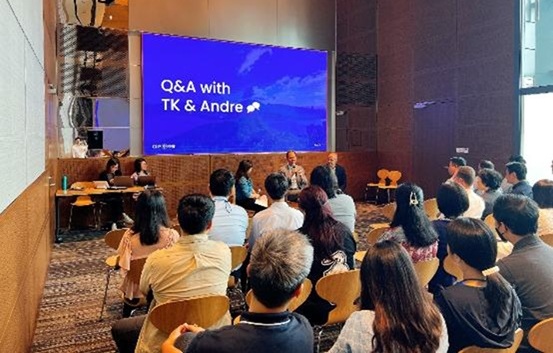
As the energy industry embraces digital transformation, CLP is committed to equipping its employees with the skills and confidence they need to leverage emerging technologies, including artificial intelligence (AI). By doing so, CLP strives to accelerate innovation, enhance operational efficiency, and strengthen its ability to deliver sustainable energy solutions.
CLP remains steadfast in its commitment to build a future-ready workforce as decarbonisation, electrification and digitalisation continue to reshape the energy industry. In addition to ongoing people investments to uplift capabilities and drive performance and growth, fostering an agile and inclusive culture is also a key focus for the Group to drive competitiveness and enable everyone who works at CLP to thrive in change.
Across CLP’s markets in Hong Kong, the Chinese Mainland and Australia, the total number of employees moderately increased as well as the total workforce including contractors, primarily reflecting our committed projects in the pipeline and outsourcing of activities.
Employees and contractors by region
Employees
Contractors
Total
Average FTE (a)
Permanent %
Fixed-term contract %
Labour supply (b)
Service contractor (c)
Contractors sub-total
Total workforce (a)+(b)+(c)1
Contractors in total workforce %
Hong Kong
5,417.8
82.3
17.7
780.7
4,199.7
4,980.4
10,398.2
47.9
Chinese Mainland
778.3
66.6
33.4
29.0
1,249.5
1,278.5
2,056.8
62.2
Australia
2,271.0
95.4
4.6
73.8
1,126.3
1,200.0
3,471.0
34.6
Group total1
8,467.2
84.3
15.7
883.5
6,575.4
7,458.9
15,926.0
46.8
Numbers have been subject to rounding. Any discrepancies between the total shown and the sum of the amounts listed are due to rounding.
CLP’s human resources policies and procedures are intended to ensure compliance with all local laws and regulations relating to employee compensation and dismissal, recruitment and promotion, working hours, rest periods, equal opportunity, diversity, as well as laws combating discrimination and, sexual and non-sexual harassment and those covering benefits and welfare. CLP takes immediate action to investigate and address any suspected breaches or issues that are brought to its attention.
Standards and procedures
Beyond compliance, CLP recognises its responsibility to respect human rights at work, as laid out in international principles, standards and laws. CLP is a signatory of the World Business Council for Sustainable Development’s (WBCSD) Call to Action for Business Leadership on Human Rights and of the Good Employer Charter established by the Labour Department of Hong Kong, in which it pledges to be an employee-oriented employer that implements good human resources management practices.
Human rights and labour standards
In addition to local legal compliance, CLP respects internationally recognised human rights relevant to its operations and requires its business partners and suppliers to do the same.
The commitment to upholding human rights is outlined in CLP’s Group Labour Standards. Referencing the United Nations Guiding Principles on Business and Human Rights and other international standards, they set company-wide minimum standards on critical working conditions and the basic rights of employees in the workplace.
CLP’s Group Labour Standards outline CLP’s commitment to international principles and conventions. They also provide details of CLPʼs company-wide minimum standards for critical working conditions, covering fair and decent work and working hours and basic rights of employees in the workplace. These standards have also been embedded into our procurement requirements for labour suppliers in Hong Kong, and CLP has strengthened the tracking and monitoring of its temporary manpower resources. Relevant expectations regarding labour practices and human rights have also been embedded in the Supplier Code of Conduct and communicated to CLP’s suppliers.
In 2025, CLP did not identify any operation or supplier with significant risks relating to child labour, young workers exposed to hazardous work, or forced or compulsory labour and no breach of laws and regulations in relation to child labour and forced labour was recorded. Additionally, no Group operation was identified in which the right to exercise freedom of association and collective bargaining was violated or at significant risk.
In Australia, in line with its obligations under the Australian Modern Slavery Act 2018, EnergyAustralia submitted its fifth Modern Slavery Statement to the government in 2025. It also continued strengthening its supply due diligence, using the Trust Your Supplier (TYS) supply chain risk management platform to enhance its supplier onboarding process and monitor modern slavery-related risks. Modern Slavery Risk remained low across EnergyAustralia’s operations.
In 2025, CLP continued to support its commitment to fair and competitive remuneration through regular reviews of its remuneration policies and practices and ongoing market pay benchmarking. It undertook independent external assessments of job size and complexity, together with external pay range benchmarking, to ensure that pay differentials reflect only the experience and performance of individual employees, along with relevant market factors. Performance and pay outcomes are reviewed internally and externally for gender bias. Differences in the average pay of females and males remain moderate, except for certain technical roles which are typically dominated by long-tenured male team members. CLP has maintained its commitment to offering entry-level salaries well above statutory minimums, underscoring its dedication to providing wages that support employees and their families.
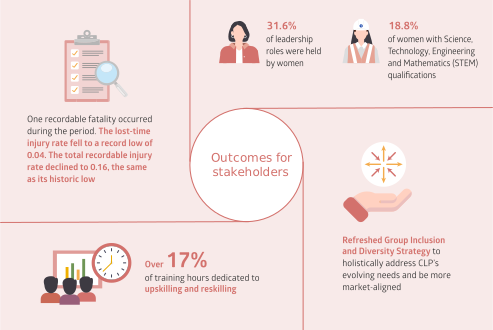
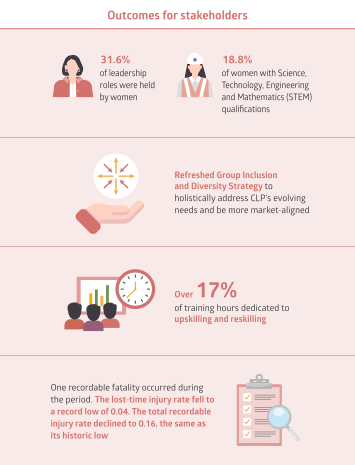
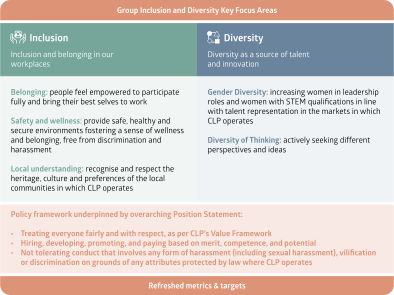
CLP has continued to expand its geographic footprint and become increasingly diverse in the technologies, products and services it offers, in its employee base, and in the customers it serves. In 2025, CLP refreshed its Group Inclusion and Diversity Strategy, adopting a holistic approach to ensure continued alignment with evolving organisational needs, market conditions and stakeholder expectations.
Group inclusion and diversity key focus areas
Policies & Practices
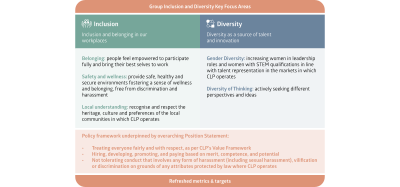
The refreshed Strategy has two pillars, Inclusion and Diversity, underpinned by meritocracy and equal access to opportunities. CLP aims to provide inclusive and welcoming workplaces in which everyone feels they can participate fully and bring the best of themselves to work. This means working to increase employee engagement and ensuring CLP’s workplaces are free from discrimination and harassment. CLP also aims to help employees recognise and respect the heritage, culture and preferences of the local communities in which it operates.
For diversity, CLP aims to keep increasing the number of women in leadership roles and women with STEM qualifications, in line with the availability of talent in the markets. CLP has broadened its focus from engineering to science, technology, engineering and mathematics (STEM) reflecting the importance of digitalisation and data. It also increases opportunities for exposure and rotation so that capable managers and team members who understand local communities and stakeholder needs can gain and share different perspectives.
Standards and procedures
CLP is a signatory to the International Energy Agency’s Equal by 30 initiative, a commitment by public and private sector organisations to work towards gender equality in the energy sector by 2030, and to the Women’s Empowerment Principles established by the UN Global Compact and UN Women in India. Local Inclusion and Diversity Councils operate in Hong Kong, India and Australia to drive the Companyʼs efforts on diversity.
CLP’s human resources policies include initiatives to encourage the retention of employees, such as flexible work arrangements, maternity leave and other family-friendly policies and benefits. CLP’s recruitment processes are designed to be fair and non-discriminatory. In Hong Kong, its processes follow the Equal Opportunities Commission Code of Practice and include the use of consistent selection criteria. In other parts of the Group, CLP complies with local legislation and codes of practice on recruitment. When conducting senior level searches, CLP also requires external recruitment firms to identify candidates with diverse backgrounds, in line with the Groupʼs values.
Monitoring and follow-up
Gender diversity progress is reviewed as part of CLP’s regular general management reviews. The Board Human Resources & Remuneration Committee reviews year on year progress. CLP also conducts regular reviews to identify any gender pay gaps and to ensure equal pay for work of equal value. Ongoing reporting and disclosure on continuous improvement in women in leadership roles and women with STEM qualifications will provide visibility of progress.
As of the end of 2025, the percentage of women in leadership roles increased slightly (2025: 31.6% vs 2024: 30.0%), while women with STEM qualifications stood at 18.8%. Over the past two years, its graduate trainee cohort has continued to include a diverse mix of genders and ethnicities. Many female graduate hires previously participated in CLP’s Female Engineering Student Mentoring Programme, the Girls GoTech programme in collaboration with The Women’s Foundation, or were recipients of the CLP Engineering Studies Award to support their final-year studies.
The percentage of women identified in succession pipelines was around 30%, which was in line with last year. Additionally, the females in high potential pools counts 33% which was also increased slightly compared to last year (30%).
Employee feedback from the 2025 Pulse Survey indicates statistically significant improvements in areas of psychological safety and perceived equal opportunity. CLPʼs efforts have also earned external recognition, receiving the HKMA 35th Anniversary Award for Most Dedicated Organisation to People Development and being honoured for leadership in advancing I&D, particularly through the I&D Awareness Week initiative. These recognitions reflect CLP’s long-standing investment in talent growth and in fostering an inclusive and diverse workplace. The success of its “Stronger Together” campaign demonstrates how a clear strategy, visible leadership commitment, and continuous engagement can drive meaningful change and build an agile, resilient, and inclusive culture.
EnergyAustralia remains an active member and contributor to the Champions of Change Energy coalition. Key initiatives during the year included efforts to close the gender pay gap, strategies to increase female representation in traditionally male-dominated fields, and work to enhance the gender balance in its talent pipeline. EnergyAustralia has consistently maintained a zero gender pay gap across all like-for-like job roles, as verified by its annual Workplace Gender Equity Agency (WGEA) reporting and analysis. Following the new legislation introduced in 2025, EnergyAustralia continued to work on gender equality targets and will publish its progress through the WGEA in 2026.
CLP has a comprehensive training and development framework in place, aligned with its business objectives, to help employees perform competently in their current roles and prepare them for future business challenges and opportunities. Investment is also being made in helping young people to develop and in building future energy industry capability that is inclusive and accessible to all.
Standards and procedures
CLP seeks to attract, retain and develop a diverse and multi-generational workforce, to develop new skills among its employees, and to share talent effectively across its portfolio of businesses. Its internal development efforts are supplemented by external recruitment for people with skills that are new-to-CLP, relating to capabilities in innovation, digitalisation and renewables.
Investing in youth and early careers
To address the need for future skills and an adequate supply of talent in a competitive labour market, CLP must offer an attractive employment proposition, make significant efforts to attract young people to the energy industry and launch careers at CLP across different functional disciplines and levels. CLP provides valuable work, training and development opportunities and an open, inclusive and supportive workplace. Career development opportunities for young people include mentoring programmes, partnerships with local and overseas institutions for work placements (for secondary and tertiary-level students), internships (for fresh and recent graduates across a range of disciplines), technical apprenticeships, operational cadetships and the CLP Graduate Trainee Programme.
The CLP Power Academy in Hong Kong also offers programmes for school leavers and working adults looking to pursue careers in the energy industry. To date, CLP has helped more than 3,000 students through the Academy since it was founded in 2017. CLP also participates in youth development schemes such as the HKSAR Government’s Greater Bay Area Youth Employment Scheme. On the Chinese Mainland, CLP supports the efforts of local technicians and engineers to obtain professional engineering qualifications, enhancing their career prospects.
Enhancing performance management as part of building a high-performing organisation
CLP has revised its performance management system in its core markets to provide enhanced feedback to team members, supporting their development and increasing performance differentiation. Currently, 100% of CLP’s employees are covered by annual appraisal review processes. Leadership expectations and competencies have also been refreshed to include guidance on the behaviours and capabilities to be expected of employees. In addition to ongoing feedback and coaching, cross-functional and 360-dagree feedback is included where appropriate.
Maintaining core skills and developing new skills for the future
CLPʼs training programme focuses on upskilling current skills and reskilling for new roles, and covers safety, technical, functional, and future-ready capabilities. Employees have the opportunity to continuously learn and build skills via online and face-to-face learning resources and programmes and can access company support for employee-initiated self-development, including support for job relevant degree programmes or certifications.
Developing leaders
CLP needs a diverse, resilient, and agile leadership team with strong stakeholder management and change leadership capabilities to deliver its corporate strategy effectively. CLP remains committed to filling most leadership roles internally and building a robust succession pipeline.
CLP has a structured process for assessing leadership potential that evaluates individuals against defined leadership competencies and provides detailed feedback on strengths and development areas.
Strategic, general management and talent development programmes are used to develop future leaders. Additionally, digital online development programmes are accessible for managers.
CLP continues to leverage partnerships with leading academic institutions such as the International Institute for Management Development (IMD), Tsinghua School of Economics and Management, Ivey Business School and Chatham House. Through these collaborations, leaders gain exposure to global economic, political, and technological trends, including energy transition, digital disruption, wellbeing, and resilience.
Monitoring and follow-up
CLP conducts regular talent and capability reviews, supplemented by employee analytics, with a focus on the general management, engineering and digital streams. These reviews monitor the progress of development programmes, recruitment campaigns, initiatives to strengthen gender diversity and cross-business assignments.
The effectiveness of this approach against a range of key performance indicators, including retention of key talent, turnover, diversity and employee engagement measures, using employee analytics tools. The Board Human Resources & Remuneration Committee reviews talent and capability progress annually.
CLP continues to invest in youth development, core skills training, leadership development and talent pipeline programmes, though its training systems and frameworks, to ensure a steady supply of future talent and skills.
Equipping the workforce with the skills necessary to thrive in the future remains a key priority for CLP. Following the review of CLPʼs sustainability targets in 2024, CLP has been tracking the percentage of training resources specifically devoted to upskilling and reskilling initiatives across all our businesses. Our focusing on such areas, which include technical development, digital and future-ready skills, is ensuring employees are well prepared for the challenges ahead.
In 2025, the time spent on upskilling and reskilling accounted for over 17% of employee training (compared to 15% last year), excluding activities such as on-the-job coaching, mentoring, departmental team development, and career advisory sessions. This metric will continue to be refined as part of ongoing efforts to align workforce capabilities with evolving business needs. To support upskilling and reskilling, CLP launched an e-learning platform containing high-quality content across diverse topics, which includes technology, leadership, commercial practice, individual well-being, and more. Adoption has been strong, with over 2,000 staff having started to learn via the platform at their own pace and in their own time. Another focus has been building foundational AI skills through initiatives like the “AI Four Trails Challenge”, which engaged over 1,000 participants in efforts that integrated AI into operations.
Offering flexible, family-friendly working arrangements
In recognition of its efforts in providing sustainable retirement benefits, CLP received awards for “Hong Kong Best ORSO (Occupational Retirement) Scheme” and “Hong Kong Best ORSO Member Communications” from Asia Asset Management. These awards honour organisations across the Asia‑Pacific region for excellence in managing employee retirement benefits, and CLP has been a repeat recipient for several consecutive years. CLP also received the Best All‑round MPF Employer Award from the Hong Kong MPF Authority last year. Together, these recognitions reaffirm CLP’s ongoing efforts to support the financial wellbeing of employees through robust retirement schemes and services.
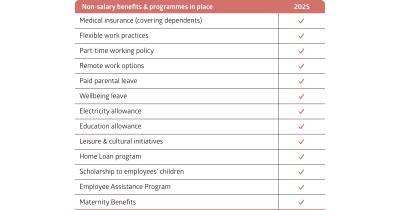
People at different life stages benefit from different working arrangements. To this end, CLP promotes family-friendly leave policies and flexible working arrangements and offers a range of leave options to support its people in achieving a good work-life balance. These include parental and adoption leave, volunteering leave and study leave. Where practicable in CLP’s offices and premises, lactation facilities are provided for mothers in the workforce.
CLP has been implementing various family-friendly measures, including implementing flexi-hours, creating a part-time working policy and a working from home policy, and providing various leave entitlements beyond the statutory requirements, such as wellbeing leave, marriage leave, maternity, and paternity leave.
CLP has enhanced its flexible work policies and online collaboration tools to enable new ways for employees to connect virtually and perform their roles better. Working options have been made more flexible, resulting in an increased take-up of new part-time work options.
In 2025, CLP recorded close to 6,700 employees utilising various types of wellbeing leave across the Group. CLP’s parental leave offerings are also vital in helping employees balance personal and professional responsibilities, with over 300 employees taking parental leave (maternity, paternity and even adoption leave where applicable) during the year. Notably, around 90% of those who took leave returned to work afterwards. This sustained return rate underscored the effectiveness of CLP’s support for employees at different life stages, reflecting both its commitment to their wellbeing and the dedication of its workforce.
Investing in health, wellbeing and strengthening resilience
CLP provides comprehensive support for its employees’ physical, social, financial and mental wellbeing. CLP is working towards initiatives to manage psychological risk at work and promoting mental health to all levels of staff. Confidential employee assistance programmes are also offered to assist employees encountering work or personal issues and needing professional support.
In 2025, CLP further enhanced its health and wellbeing offering with flexible medical benefits designed to meet diverse employee needs. The expanded range of options reflects the Group’s proactive approach to supporting employee wellness and ensuring access to care that suits individual circumstances. CLP’s Flexi Medical Plan earned the Healthiest Workplace Award (Silver), standing out among submissions from leading international financial institutions and further highlighting its commitment to employee health and a supportive and inclusive working environment.
CLP also received multiple awards in Hong Kong and the Chinese Mainland for its efforts to advance employee wellbeing. These included the 2025 Top 10 Corporate Health Initiative awarded by the National Health Commission of China for the launch of innovative initiatives with measurable health and productivity outcomes, as well as the Silver Award for the Safety Management System, the Occupational Rehabilitation Award, the OSH Enhancement Program Award, and OSH Innovative Award at the 24th Hong Kong Occupational Safety and Health Award Forum. Together, these accolades reinforce CLP’s dedication to safeguarding employee wellbeing and fostering a healthy, high‑performing workforce.
Keeping everyone informed and engaged
CLP’s employee relations approach focuses on establishing and maintaining strong working relationships with employees, being proactive in consulting on any workplace changes and providing opportunities for employees to raise concerns. CLP employees have the right to join organisations and professional bodies of their choice. CLP respects and fully complies with all legal requirements with regards to union membership and collective bargaining. In Australia, CLP engages in collective bargaining with nearly 800 employees through certified enterprise bargaining agreements approved by the independent workplace relations tribunal, the Fair Work Commission. These agreements cover most terms and conditions of employment, including notice periods, provisions for consultation and dispute resolution.
To better understand employees’ perspectives, CLP partners with independent external consultants to conduct regular engagement surveys. CLP shaped its 2025 culture and engagement priorities based on insights gained from the all-employee listening survey in the prior year. The subsequent Pulse Survey in 2025 achieved a strong nearly 90% participation rate and showed a statistically significant uplift in the area of sustainable engagement. The high response rate, together with the almost 5,000 comments received, reflects employees’ strong willingness to engage and share constructive feedback.
EnergyAustraliaʼs engagement score also rose in 2025, continuing an upward trend and representing a meaningful improvement from the prior result. It reflects the ongoing efforts to foster an environment where its people can be at their best, during a period of significant transformation.
In Hong Kong, joint consultative committees have been established which act as an additional channel of communication between the Company and employees’ representatives. Employee benefits are regularly benchmarked to ensure that appropriate remuneration packages and staff support are provided.
Developing an agile organisational culture is critical for future success. In 2025, CLP focused on bringing the refreshed Value Framework to life by embedding agility into everyday practices and reinforcing behaviours that help people thrive in a fast-changing environment.
To deepen engagement, Value Alignment Workshops continued across Hong Kong and the Chinese Mainland fostering open dialogue and practical learning, helping employees build habits that support agility and resilience. New workplace designs were also introduced to promote flexibility and collaboration.
Other key initiatives included GiveMeFive!, a recognition platform celebrating behaviours aligned with CLPʼs values. Employees recognise and appreciate one another’s contributions through the digitally-enabled platform, helping to strengthen a culture of collaboration and continuous improvement.
Supporting employees and communities affected by energy transition or business restructuring
CLP provides comprehensive support to employees whose jobs are affected by business change or restructuring. Support is tailored to individual needs and includes training and skills development, career planning, assistance in redeployment and financial counselling. To this end, CLP has actively engaged with local stakeholders from employee representative organisations and local educational institutions to ensure that study opportunities are available to help meet the needs of its people and the regionʼs new and emerging industries.
Following the announcement of the 2028 closure of Yallourn Power Station in 2021, EnergyAustralia implemented the Yallourn Workforce Transition Programme to provide career transition support to employees. The Yallourn Transition Team continued to provide comprehensive support to employees, including employee engagement, training, re-skilling and accreditation, financial advice, job search skills and other specialist support. Progress and support will continuously be managed to facilitate the transition.
CLP remains committed to continually improving its HSE performance by building capabilities and capacities to prevent harm to its people, assets and the communities in which it operates in.
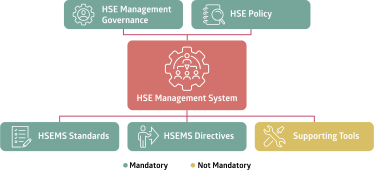
CLP has an integrated HSE Policy which in turn drives the Group’s HSE Management System (HSEMS). The CLP HSEMS covers four areas:
The diagram above shows the core components of the Groupʼs HSEMS and their interrelationships.
CLP’s HSE Policy lays out the strategy, direction, and vision for its HSE performance. Developed in line with the HSE Policy, the HSEMS enables CLP to manage risks in a planned and systematic way while continually improving its HSE performance.
The HSEMS Standards are mandatory and assist in supporting the detailed requirements of the HSE Policy and Groupwide HSE risks. The HSEMS Directives supplement the Standards by determining how specific processes are conducted across the Group (e.g. Incident Management). The HSEMS Supporting Tools are not mandatory but provide further support or guidance on how to meet the HSEMS requirements.
The HSEMS provides:
Clear requirements and expected outcomes based on goal-oriented risk reduction;
Process flexibility to cope with operational diversity (e.g. size, regions and nature of work conducted);
Integration of the feedback loop between CLP Group requirements and work done by the frontline; and
Less HSEMS clutter (e.g. minimising duplication, contradictory, or inconsistent requirements).
To support safe operations, CLP has an HSE Strategy with clear objectives, focus areas and timelines, supported by input by HSE professionals and a suitable budget.
In line with the Groupʼs HSE Strategy, an annual improvement programme is developed, approved and communicated to staff and contractors in each business unit. Recommendations are implemented on agreed timelines and the programme progress is monitored.
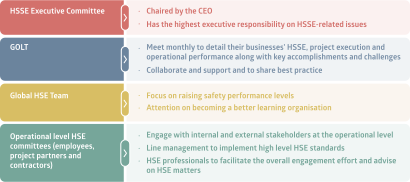
The Group’s Health, Safety, Security and Environment (HSSE) governance involves the top-tier HSSE Executive Committee and monthly Group Operations Leadership Team (GOLT) meetings to review businessesʼ HSSE, Project Execution and operations. Bi-monthly global HSE Team meeting focus on knowledge sharing and safety culture, supported by various HSE committees at operational levels. The diagram below lays out the hierarchy of operational responsibilities.
A three-yearly functional assurance cycle (2023-2025) was successfully completed, achieving 100% coverage of CLP controlled Business Units, confirmed strong conformance and the robustness of our HSE management practices, while identifying targeted improvements to drive continuous HSE management enhancement. Looking ahead, CLP will transition to a revised, risk based assurance approach to deliver greater value and resilience, ensuring alignment with strategic priorities. To streamline assurance and reduce duplication and redundancy, Group HSE collaborated and will continue to collaborate with Group Internal Audit to leverage subject matter expertise in specific areas to avoid duplication of effort and resources, while maintaining rigor.
Significant updates to the HSE Management System were completed in 2025, including a full review and refresh conducted with the Business Units feedback. These enhancements ensure our governance remains current, practical and outcome focused.
Safety performance is reported internally every month and is housed on an open dashboard for on demand access. Safety performance data and associated insights are collected and presented in the monthly and bi-monthly meetings of the GOLT and the Global HSE Team. These are also reported on a quarterly basis to the Group HSSE Committee, chaired by the CEO.
CLP’s HSE Incident Investigation and Reporting Standard sets out the standard for implementing and maintaining a safety incident management system across the Group. In the event of a major incident, the CLP Group Incident Investigation Panel (IIP) is provided with the output investigation provided in line with the Investigation Report Format Standard. The IIP, chaired by senior members of staff from outside the business unit in which the accident occurred, conducts a thorough investigation to identify factors contributing to the incident and actions required to prevent a recurrence. The IIP’s reports are reviewed by the Group Chief Operating Officer and the regional Managing Director.
Training and awareness
Personnel are only asked to do work in roles for which they are deemed capable and competent, based on careful selection, placement, training, ongoing competency assessment and authorisation of employees and third-party independent assessment where appropriate. A process is in place to deliver training to ensure individuals understand the hazards, risks and control measures associated with their work.
At the asset level, there is flexibility to structure health and safety measures and design more specific relevant training. This includes monitoring the percentage of contractors who have undertaken training. Safety training requirements are included in all contracts and all contractors are expected to undergo safety training relevant to their duties. Spot checks are conducted to ensure compliance.
The strategy unites the organisation under shared priorities of capability, resilience, collaboration, technology and excellence, ensuring strategic alignment. To drive accountability and accelerate progress, a new reporting dashboard was deployed to monitor annual key initiatives and track each business unit’s performance against its stated objectives. This data driven approach enables timely insights, fosters continuous improvement, and strengthens the Group’s ability to achieve high standards of safety, operational excellence and a culture of learning across the Group.
The CLP Group 2025-27 HSE Strategy sets out the key opportunities and a framework for working together to make CLP healthier, safer and more sustainable. The pillars and elements that define the strategy are as follows:
Strengthening Capability & Capacity Strengthening capability and understanding our people’s capacity to deliver
Risk and Resilience Resilience and resourcefulness in a changing landscape
Strength in Synergy Collaborating for success from different lenses
Reimagining Work through Technology and Digital Solutions Innovate, Integrate and Elevate
Focus on Excellence and Emerging Themes Owning persistent and emerging challenges
CLP continued its pursuit of eliminating serious injuries and fatality prevention by embedding risk and resilience principles into core operations. A key focus was improving the quality and thoroughness of incident investigations through the development of the Group HSE Incident Investigation Assurance Guideline, ensuring lessons learned are systematically applied across all business units. This will be complemented by enhanced risk control effectiveness reporting using Enablon and Power BI systems in the future, with the approach currently under development and testing, enabling proactive identification of vulnerabilities before they escalate into serious events. Additionally, the Group advanced process safety management by launching a dedicated dashboard and updating definitions to include renewable assets, strengthening oversight of high risk activities. These measures, combined with targeted reviews of significant incidents or near miss events, underscore CLP’s strategic approach to building resilience and preventing life altering events through visibility, data driven insights, technology integration, and continuous learning. The recently introduced Fatality Prevention Award under the Annual CLP CEO HSE Award had dual winners this year (CLP Power & CLP China Business Units), reflecting the numerous outstanding initiatives that made it difficult to select a single winner. These innovations, many involving advanced technologies, are making a meaningful difference to how we work safely across the Group.
Data and digital solutions were used to reduce exposure and accelerate insight driven prevention. The Group progressed Enablon development, built a Process Safety reporting dashboard, and established a HSE Technology Innovation Hub to centralise knowledge and tool adoption. An AI Copilot Studio chatbot agent was developed to streamline access to HSE guidance and operational information, with the aim of helping teams surface controls and procedures faster at the point of work. To broaden capability and adoption, CLP delivered a series of Safety Tech webinars covering AI in Health & Safety, the connected human in technologies, and future trends, strengthening digital literacy and the practical application of technology in risk reduction.
A Group HSE Capability Framework was defined and embedded into the HSE Management System, giving leaders and teams a clear view of competencies needed to manage risk and deliver safe outcomes across varied operating contexts. These capabilities are based of international best practice competency references and mapped against CLP’s internal leadership framework and the values framework, aiming to prepare our teams for the challenges that will face practioners into the future. Additionally, group HSE developed Project Management Academy HSE modules for future cohorts, and continued to evolve a systems thinking approach informed by Human and Organisational performance and Learning from Normal Work approaches, including new communication artifacts and training content to leverage frontline insights and improve control design before incidents occur.
Group HSE deepened internal collaboration with HR, Group Operations and Digital (including AI and chatbot initiatives) and expanded communication reach through an enhanced Group HSE communication plan, bringing in the Group Operations team and establishing the Kai Tak community program to engage more people in dialogue and overall community engagement. Wellbeing remained integral to safe work with a wellbeing series “The Science of Wellbeing” based on the Yale offered program, provided accessible ways for people to engage with their health, reinforcing a culture where health & wellbeing is discussed openly and managed proactively.
Quality formally joined the HSE function, creating an integrated HSEQ team. This alignment strengthens governance and ensures a holistic approach to operational excellence across the Group. Quality is currently focused on uplifting standards through the development of robust strategy and policy, laying the foundation for consistent, high quality outcomes and supporting our commitment to continuous improvement.
2025 Safety performance
It is a matter of profound regret to report incidents that resulted in loss of life during the year, across our portfolio. Every injury and fatality is a stark reminder of the human impact behind our safety statistics. CLP reinforces our commitment to learning and continuous improvement. CLP China reported a fatality at its minority investment entity Inner Mongolia Guohua International (GI) Zhungeer Power Plant from a vehicle crush incident. Apraava reported a fatality from a fall from height, involving a subcontractor of Apraava’s main contractor, at Apraava Energy’s Sidhpur wind farm in Gujarat state. CLP Power reported two traffic incidents. One incident resulted in the fatality of a member of the public, a pedestrian struck by a company vehicle, and the other involved a third-party vehicle which careered into the pedestrian walkway after a traffic incident, causing fatality of a contractor worker at a CLP worksite.
CLP is deeply saddened by these incidents, and Apraava Energy and CLP Power have taken measures to improve safety by examining the incident to manage and reduce critical risks in future.
The key safety metrics which are reported on operational control basis are summarised in the table below.
Group safety performance 1,2(employees/contractors)
Employees/Contractors
Employees and contractors combined
Fatalities (number)
0/1
1
Fatality rate (number per 200,000 work hours)
0.00/0.01
0.01
Days away from work injuries (number of personnel)
4/2
6
Lost time injury rate (number per 200,000 work hours)
0.05/0.03
0.04
High-consequence injuries (number of personnel)
0/1
1
Total recordable injury rate (number per 200,000 work hours)
0.22/0.10
0.16
Work-related ill health (number of personnel) – employees only
0
0
Lost days (number) – employees only
3443
3443
The safety figures include majority owned entities by CLP or under CLP’s operational control, defined as those that have full authority to implement CLP’s operating policies, and under construction or in operation during the reporting year.
The LTIR and TRIR figures are for work-related injuries only (excluding work-related ill health and commuting related injuries), in line with the requirements of the Global Reporting Initiative. There were no work-related ill health (employee only) and commuting related injuries (employee and contractor combined) in 2025.
121 out of 344 days were carried forward from two incidents in 2024.
Lost time injury rate and total recordable injury rate of CLP Group (employees and contractors combined)
In 2025, the Group recorded a single Serious Injury and Fatality (SIF) event. Total SIF events increased by 17% year on year, rising from 41 to 48. Importantly, 29 of these were SIF observations, instances where frontline teams identified a potential loss of control and intervened early. This represents a positive shift toward proactive risk management and greater overall awareness.
At the same time, our lost-time injury rate (LTIR) and total-recordable injury rate (TRIR) reached their lowest levels since 2016. These improvements indicate that our injury prevention systems remain effective in managing lower severity risks. However, exposure to serious harm has not decreased in line with these reductions. High energy tasks, including those involving gravitational, electrical and pressure sources, continue to account for the majority of SIF related risks.
This persistent gap between improved lagging indicators and continued SIF exposure underscores the need to strengthen real time verification of critical controls. Ensuring that these controls function reliably at the point of work remains a priority for achieving consistent, sustainable risk reduction.
The Company places significant emphasis on managing various human rights matters, including labour rights and fair work practices, health and safety and well-being, inclusion and diversity (I&D), and other community impact.
Identifying salient human rights topics
CLP completed a human rights due diligence in 2024 to identify, map and assess the saliency of human rights topics across its operations in accordance with the United Nations Guiding Principles. The assessment covered areas such as employment practices, environmental concerns, community relations and impacts on stakeholders. Saliency is assessed by considering the scope, scale, remediability and likelihood of potential harm. A high saliency human rights topic is particularly prominent due to its potential for negative impact.
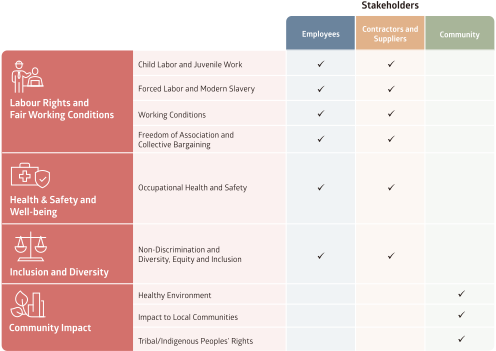
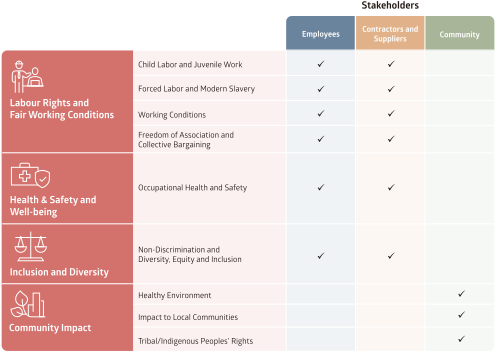
CLP has prioritised its human rights topics based on their relative saliency. The table below outlines these topics and their relevance to stakeholders.
Salient human rights topics and their relevance to stakeholders
Refreshing our commitments on human rights
CLP is developing a standalone human rights policy statement to reinforce its commitment to respecting human rights across its own operations and supply chain. Following the United Nations Guiding Principles on Business and Human Rights, this policy statement will be grounded in the International Bill of Human Rights, the International Labour Organisation’s (ILO) Declaration on Fundamental Principles and Rights at Work, and the UN Global Compact.
Embedding human rights into our operations
In the course of developing the policy statement, CLP identified opportunities to further strengthen its monitoring and grievance mechanisms, and to enhance internal capacities on the topics. These are intended to address a wider range of salient human rights issues and make them more accessible for a broader spectrum of stakeholders.
To ensure any commitments are supported by robust management systems and processes, local businesses are responsible for development implementation strategies suitable for the local context. For instance, the social due diligence for new investment projects has incorporated human rights considerations to support investment decision-making.
The transition to a net-zero economy may result in changes in jobs, supply chains and energy prices, impacting on labour rights and communities’ access to affordable energy. These areas will be covered in the upcoming Human Rights Policy Statement which strengthens CLP’s approach to a just transition. For details on CLP’s commitments and current measures regarding just transition, please refer to CLPʼs Climate Vision 2050: Powering an orderly transition and the Supporting Employees to Thrive in Change section in this report.
Strengthening supply chain sustainability management for human rights risks
CLP’s commitment to respecting human rights extends beyond its own operations. Recognising both the potential human rights risks in its supply chain and the opportunity to advance human rights through collaboration with suppliers, CLP’s Supplier Code of Conduct (SCoC) has set out its expectations for suppliers on sustainability topics, including Labour Practices and Human Rights. Labour Practices and Human Rights are among the focus areas of CLP’s Sustainable Procurement Programme, and related considerations are embedded in the supplier sustainability risk profiling and assessment tools. For more information, please refer to the Supply chain sustainability management section.
We use cookies for the purpose of enhancing your user experience and helping us better understand how the site is used. By continuing to visit this site, you agree to our Use of Cookies.