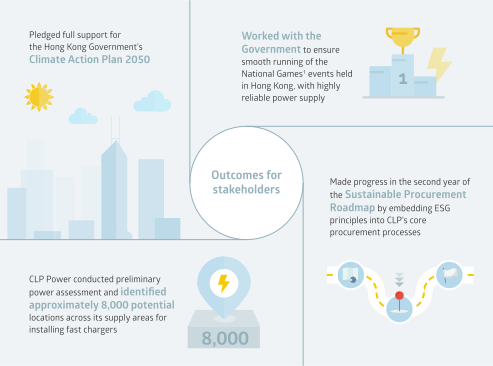
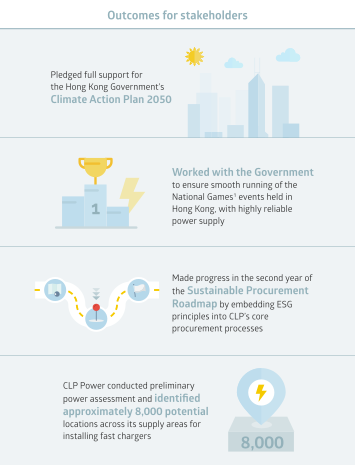
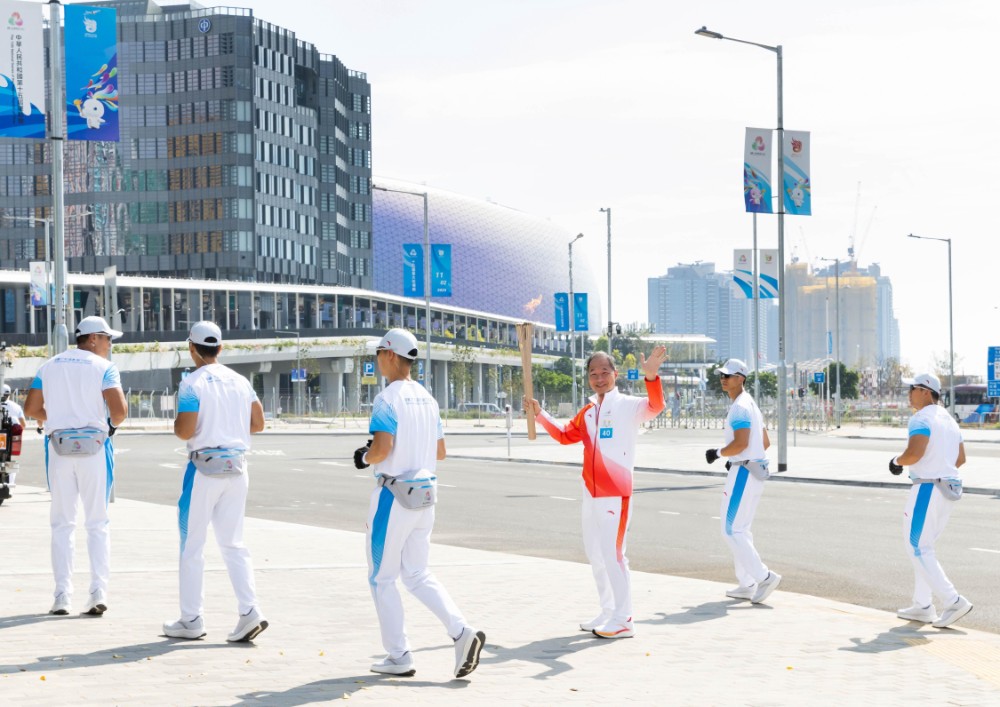
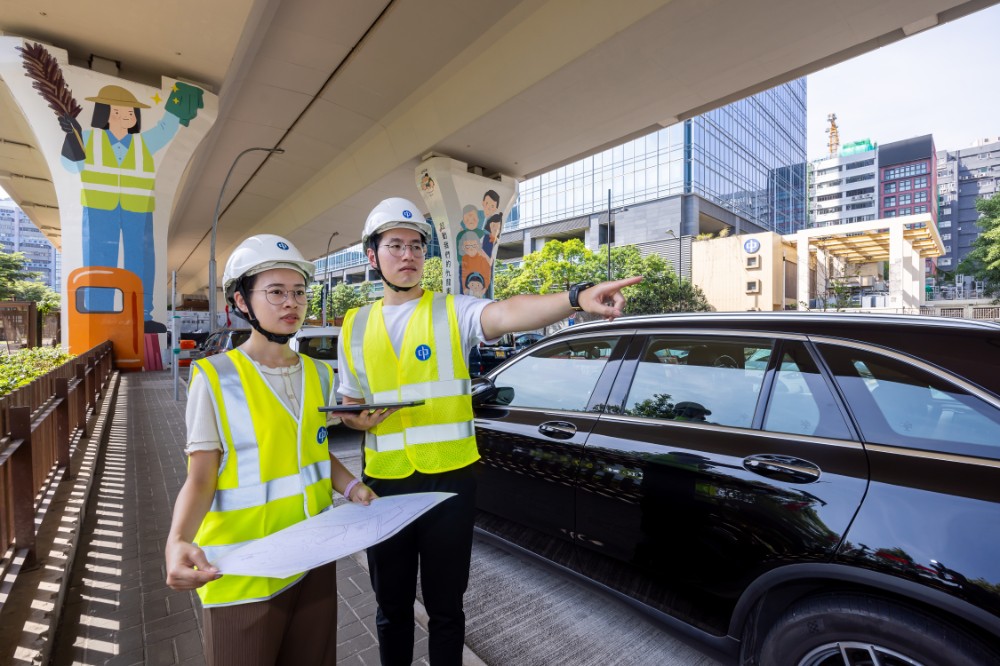
CLP continued to be a trusted partner to its stakeholders, fostering strong stakeholder relationships, promoting sustainability, and upholding ethical business practices throughout its value chain. The Company supports initiatives by government authorities aimed at achieving shared sustainability objectives. CLP also engaged proactively with suppliers and contractors through capacity-building activities, consistent communication, and through robust governance and compliance standards. These concerted efforts support the resilience and ongoing success of both CLP and its partners.
Copy linkCopied link
In the face of the climate crisis, energy transition is a critical priority for governments around the world. CLP is continuing to engage with governments and regulators to formulate decarbonisation policies and plans, while promoting the sustainable development of energy systems. Through its participation in a range of industry and professional bodies, CLP is also providing input into the major issues affecting the energy sector and establishing itself as a thought leader for the industry.
CLP maintains a politically neutral stance and refrains from making political contributions. When considering proposals for CLP to become a member of an organisation, the respective Corporate Affairs teams review the proposals based on CLP’s business objectives and the purposes of engagement. All membership proposals are subject to the final approval of the senior management of the Group or its Business Units.
Download CLPʼs Policy on Making Political ContributionsIn Hong Kong, CLP Power works with the Hong Kong SAR Government under the Scheme of Control (SoC) Agreement, which sets out an effective and stringent regulatory framework and mechanism for the city’s electricity industry.
CLP Power’s current five-year Development Plan, covering 1 January 2024 to 31 December 2028, was approved by the Government in 2023. Offering strong support for the Government’s policy priorities, it focuses on investments designed to drive Hong Kong’s economic and infrastructural development, continued delivery of a world-class reliable electricity system, transition to a resilient smart city, and continuation of the decarbonisation journey.
CLP Power has maintained regular communication with Government officials and legislators through site visits and information sharing sessions, fostering understanding of the strategies and initiatives for shaping a low-carbon future. CLP Power also actively participates in major Government and industry consultations, putting forward carefully-considered positions relevant to the energy sector’s development.
In actively supporting the development of the energy industry, CLP has drawn on its power expertise to shape policy and advance sectoral initiatives. CLP’s responses to major public policy consultations and its position on critical issues such as climate change are available on the Group’s websites and other online channels.
None of CLP’s businesses receive any significant government financial assistance.
CLP engages with various organisations to keep abreast of different stakeholders’ perspectives, navigate policy uncertainties and shape informed policy-making. The table below outlines the total amount CLP has contributed to organisations influencing public policy. These contributions include membership fees, donations, sponsorships and input into policy position papers. CLP has a general policy of avoiding political contributions, and no contributions were made to political parties, government officials or political candidates in the year.
2025 | 2024 | 2023 | 2022 | 2021 | |
|---|---|---|---|---|---|
Lobbying, interest representation or similar (HK$M) | 0 | 0 | 0 | 0 | 0 |
Local, regional or national political campaigns, organisations or candidates (HK$M) | 0 | 0 | 0 | 0 | 0 |
Trade associations or tax-exempt groups (e.g. think tanks) (HK$M)1 | 6.91 | 7.06 | 8.05 | 8.69 | 14.12 |
Others (e.g. spending related to ballot measures or referendums) (HK$M) | 0 | 0 | 0 | 0 | 0 |
CLP prioritises engaging with organisations actively involved in addressing climate change and broader energy market policies. It devotes considerable resources to the organisations listed below (in alphabetical order) through membership, sponsorship and other contributions, including active involvement by CLP senior management.
Organisation | Description of organisation | CLP contributions and engagement |
|---|---|---|
ASSOCHAM is India’s oldest apex industry chamber, representing over 450,000 members and connecting industry with government to drive initiatives that enhance India’s competitiveness. | In 2025, Apraava Energy’s Head of Regulatory Affairs & Policy Advocacy played an active role at ASSOCHAM, engaging with Ministry of Power officials and industry peers to address key issues like Right of Way challenges, procurement delays for transmission assets, and the need for in-principle approvals in Change in Law and Force Majeure cases to improve project viability. | |
Association of the Electricity Supply Industry of East Asia and the Western Pacific (AESIEAP) | AESIEAP is a regional non-governmental organisation founded in 1975 to promote exchanges and cooperation in the Asia-Pacific power industry. Its members are from countries and regions including China, Japan, South Korea, Singapore, the Philippines, Thailand, and Australia etc. | In 2025, representatives from CLP Power presented 13 technical papers at the 25th Conference of Electric Power Supply Industry of the Association of the Electricity Supply Industry of East Asia and the Western Pacific. This yearʼs conference attracted over 3,000 participants from energy organisations, Government departments, power companies, and research institutes from the region and around the world. |
The AEC represents 20 major electricity and downstream natural gas businesses operating in the competitive Australian wholesale and retail energy markets. | EnergyAustralia participates in various AEC working groups to address a range of energy market issues. For instance, an EnergyAustralia representative currently serves as Deputy Chair of the Sustainability Working Group. | |
The BCA is a CEO-led industry association representing more than 100 of Australia’s largest businesses. It supports the transition to a more carbon-efficient economy, with the goal of net-zero emissions by 2050. | EnergyAustralia is a member of the BCA and supports its advocacy for a national, bipartisan energy and climate change framework to achieve reliability, affordability, and sustainability objectives. | |
The BEC is an independent charitable organisation established by the business sector in Hong Kong, which promotes environmental excellence by advocating for the uptake of clean technologies and practices. | CLP actively participates in or sponsors events, public consultations and working groups organised by the BEC. In 2025, CLP sponsored two BEC EnviroSeries Conferences held in May and November. CLP is also a signatory of the BEC Net-zero Carbon Charter and the Power Up Coalition. | |
The CII, a not-for-profit industry-led organisation, works to create and sustain an environment conducive to Indiaʼs development through various advisory and consultative processes. It works closely with the Indian government on policy issues, interfaces with thought leaders and looks to enhance industry efficiency, competitiveness and business opportunities. | Apraava Energy has been a long-standing CII member, actively contributing renewable energy perspectives to India’s climate policy dialogue. The Managing Director spoke at the Global Sustainability Summit 2025 and was named Co-Chairman of the National Committee on Power at the International Energy Conference & Exhibition 2025. | |
A global accelerator programme for electric utilities, Free Electrons arranges for startups to work closely with utilities to address the challenges arising from the increase of renewable energy and the decentralisation of energy systems. | CLP has been participating in Free Electrons since 2018. The 2025 programme attracted applications from over 890 start-up companies worldwide. CLP collaborated with nine startups, piloting their innovative solutions in areas such as renewables, smart grids and energy storage. In July 2025, CLP hosted the third module in Hong Kong, bringing together seven leading global utilities with this year’s top 15 start-ups to explore innovative energy solutions. The week culminated in the Hong Kong Innovation Immersion Session, which drew over 170 global participants. | |
The IFRS Foundation develops internationally recognised disclosure standards that bring transparency, accountability and efficiency to financial markets. Responding to the need for consistent and comparable sustainability information, it created the International Sustainability Standards Board (ISSB) in 2021 to develop IFRS Sustainability Disclosure Standards. | CLP is supporting the development of globally comparable sustainability disclosure standards in its role as a member of the IFRS Sustainability Alliance. Through this programme, CLP connects with peers to advance standardised sustainability disclosures, strengthen reporting practices, and stay at the forefront of evolving regulatory requirements. To support Hong Kong’s sustainability and accounting professionals in navigating the ISSB Standards, CLP sponsored a two-day ISSB preparer readiness training session hosted by the Hong Kong Institute of Certified Public Accountants and the IFRS Foundation in 2025. | |
IERE is a worldwide, non-profit organisation for exchanging new electricity and energy-related technologies as well as research and development information. Its members include participants from the electricity and energy supply industries, equipment providers, academic researchers, and government bodies. | CLP joined IERE in 2000 and has been an Executive Member since 2014. CLP serves on the board as a board member and had a representative as Treasurer in 2025. CLP has continued to work with IERE on joint research and development programmes such as the Technology Foresight Report, and shared the demand response programme in the 2025 IERE-TPC Taipei Net-Zero Workshop. | |
KFBG raises awareness of ecological and sustainability matters, undertakes species conservation and ecosystem restoration, reconnects people with nature and promotes sustainable lifestyles. | CLP has been supporting KFBG’s 10-year forest restoration programme since 2022. This programme is supporting knowledge and capacity building on reforestation and potentially contributing to nature-based solutions and biodiversity recovery. In 2025, CLP and KFBG celebrated a major milestone with the planting of the 10,000th tree seedling. For further details, please refer to Case study: Major milestone reached for the 10-year forest restoration programme partnered with Kadoorie Farm & Botanic Garden (KFBG). | |
Formed in 2007, CIC consists of a chairman and 24 members representing various sectors of the construction industry in Hong Kong. Its main functions are to forge consensus on long-term strategic issues, convey the construction industry’s needs and aspirations to the Hong Kong SAR Government, and provide a channel for the Government to solicit advice on construction-related matters. | CLP is actively involved in the CIC. Both CLP Group and CLP Power participate in the Hong Kong Construction Industry Safety CEO Forums, supporting efforts to reduce fatalities in the construction industry. | |
HKGCC is a member-led organisation dedicated to improving the business environment and its competitiveness in Hong Kong. Its members consist of over half of the flagship corporations listed in the Hang Seng Index, one-fifth of the Fortune Global 500 companies, as well as many thriving SMEs and start-ups. | CLP actively participates in and sponsors events, public consultations and working groups organised by the HKGCC. The CLP Power Chairman and Managing Director are currently serving as members of the Chamber Council and the Managing Director is also the Vice Chairman of the Real Estate & Infrastructure Committee. CLP’s senior management also serve as members of various Committees in support of the Chamber’s work. | |
HKIoD, Hong Kong’s premier body representing directors, works to foster the long-term success of companies through advocacy, standards-setting in corporate governance and professional development for directors. | The CLP Holdings Limited Chief Executive Officer has been invited as Fellow member of HKIoD since 2024. CLP’s senior management are members of the Advisory Council and Steering Committee of the HKIoD-hosted Hong Kong chapter of the Climate Governance Initiative, a programme that aims to raise awareness of climate issues among company directors. | |
Founded in 1999, IETA is a non-profit organisation committed to empowering businesses to engage in climate action, pursue net zero ambitions to advance the Paris Agreement’s objectives, and establish effective market-based trading systems for GHG emissions and reductions. IETA collaborates with other stakeholders on developing components of global GHG market and trading systems. | By having a representative serve as a Council member and sponsoring IETA’s events and programmes, CLP contributes to the development of effective carbon markets while gaining insights into global and Asia-specific carbon market trends. As part of its ongoing support for IETA, CLP was a Gold Sponsor of the Asia Climate Summit 2025, where it shared perspectives during a roundtable on carbon accounting and a panel discussion on compliance carbon markets in the Asia-Pacific region. | |
The WBCSD is a global, CEO-led organisation of over 200 businesses that is working to accelerate the transition to a more sustainable world. Its Sustainable Development Goals are being pursued through six work programmes: Circular Economy, Cities & Mobility, Climate & Energy, Food & Nature, People & Society and Redefining Value. | CLP actively collaborates with the WBCSD on sustainability initiatives. In 2025, as part of WBCSD’s Corporate Performance & Accountability programme, CLP, WBCSD and BEC co-hosted two roundtable sessions. The first session engaged with Hong Kong’s financial and sustainability executive communities to gather insights into the new sustainability disclosure requirements under the Hong Kong Financial Reporting Standards. The second convened general counsel and legal leaders to discuss legal risks associated with the energy transition. As a member of WBCSD’s Embed Nature working group, CLP also participated in the groupʼs 2025 workshop series, which leveraged insights from the Accelerating Transformation for Nature (A-Track) project. The workshops covered topics including location-specific decision making for nature assessments, as well as the application of spacial datasets and metrics to assess locations and tailor nature strategies (A-Track – Embed Nature). | |
The WEC is an UN-accredited global energy body formed in 1923 with more than 3,000 member organisations in over 90 countries. The WEC informs global, regional and national energy strategies by hosting high-level events, publishing authoritative studies (e.g. the World Energy Trilemma Index) and working through its extensive member network to facilitate global energy policy dialogue. | CLP began participating in the WEC as a member organisation in 1988. Since the formal establishment of the Hong Kong member organisation (WEC-HK) in 2016, CLP’s CEO has been serving as Chair and representing WEC-HK and its members. In 2025, CLP contributed to commentaries on Hong Kong in the 2025 edition of World Energy Issues Monitor, while contributing Hong Kong’s profile for the World Energy Trilemma. CLP was honoured to host the WEC Asia Regional Meeting in Hong Kong, a significant milestone bringing together a diverse group of stakeholders to shape Asia’s energy future. |
Copy linkCopied link
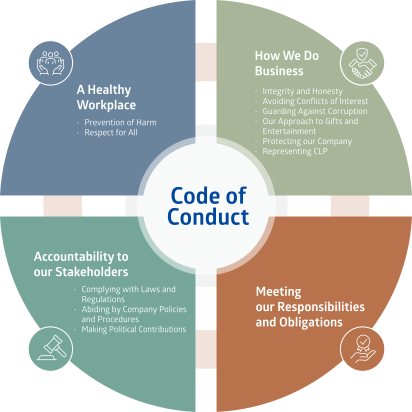
CLP’s Code of Conduct sets out the Principles that guard against corruption within CLP. The Code applies across the entire Group, including CLP Holdings, its wholly owned subsidiaries, and joint ventures or companies in which CLP holds a controlling interest. It is available to the public in both English and Chinese.
All employees of CLP, irrespective of their position and function, are expected to fully adhere to the principles contained in the Code. In the case of joint ventures or companies in which CLP does not hold a controlling interest, CLP’s representatives concerned are expected to act in accordance with the Code and to make a concerted effort to influence those with whom they are working to act to similar standards of integrity and ethical behaviour. Likewise, contractors working for CLP are urged to follow the Code for the duration of their contract with CLP. Reports on Code of Conduct breaches are reviewed by an external auditor during the annual auditing period.
In addition to the Code, CLP has implemented an Anti-Fraud Policy as part of its Corporate Governance Framework. This is aimed at preventing and controlling fraud activities such as corruption, conspiracy, embezzlement, money laundering, bribery and extortion.
Download CLP’s Code of ConductDownload CLP’s Anti-fraud PolicyRegular Code of Conduct training is mandatory for all staff joining the Company. CLP promotes the Code of Conduct and Whistleblowing Policy to employees, on a regular basis, by advising of any updates or revisions.
Every four years, the Company conducts a Group-wide Business Practice Review (BPR). This review includes refresher training for all employees to reinforce their understanding of the Code’s Principles and to ensure business practices remain compliant and ethical.
The BPR included a number of case studies based on past violations to demonstrate the proper way to handle potential and actual situations involving Code violations. Contractors are encouraged to complete the training alongside CLP employees.
The latest BPR training conducted in 2025 for Hong Kong and Chinese Mainland, while Australia also conducted its localised BPR training in the same year. The next round of BPR training is scheduled to commence in 2029.
CLP regularly reviews the Code of Conduct to align with global best practices and stakeholder expectations. The latest version (December 2024) includes 12 guiding principles, each illustrated with specific examples and scenarios, to help employees and users better understand how to apply the Code of Conduct.
Every four years, CLP conducts a Business Practice Review (BPR), which includes running training modules to reinforce expected standards of conduct and refresh employees’ understanding. In 2025, CLP introduced a BPR e-learning course that covers all 12 guiding principles, including “Guarding Against Corruption”, to familiarise employees with the updated Code of Conduct. All employees were required to participate in the BPR, and contractors were encouraged to participate where possible.
CLP’s Reporting and Handling of Irregularities procedure specifies the requirements, processes and responsible parties for reporting and investigating irregularities. The procedure also details the steps for escalating issues to Group Internal Audit (GIA) and the Audit and Risk Committee (ARC), and for finalising any disciplinary action following investigation.
In 2025, 40 breaches of the Code of Conduct were reported. None were material to the Group’s financial statements or overall operations. The breaches were mainly related to issues of workplace behaviour and individuals’ ethics and integrity.
There were no convicted cases of corruption. Any breaches were managed internally in accordance with CLP’s complaint handling process for violations of the Code of Conduct. All confirmed breaches were reported to the Audit & Risk Committee periodically. Regarding whistleblowing cases, 26 cases were received in 2025 compared with 20 in 2024.
Confirmed cases of breaches of the Code of Conduct Principles in the past five years are shown in the table below.
2025 | 2024 | 2023 | 2022 | 2021 | |
|---|---|---|---|---|---|
Prevention of Harm | |||||
Includes issues regarding health and safety, and alcohol and drug abuse. | 1 | 2 | 0 | 0 | 0 |
Respect for All | |||||
Includes discrimination, harassment and other issues related to not respecting people. | 14 | 11 | 2 | 5 | 4 |
Integrity and Honesty | |||||
Includes unethical business behaviour related to integrity, honesty and fairness. | 8 | 8 | 0 | 2 | 10 |
Other Principles | |||||
Includes avoiding conflicts of interest, abiding by company policies and procedures, protecting our Company, meeting our responsibilities and obligations, and representing CLP. | 17 | 10 | 10 | 3 | 4 |
Total | 40 | 31 | 12 | 10 | 18 |
Copy linkCopied link
CLP is a law-abiding company that aspires to go beyond legal requirements and bring international best practices to its operations. CLP voluntarily follows higher standards that reflect the Company’s principles and values and is prepared to forego opportunity or advantage to uphold the highest standards of corporate governance and integrity if necessary. Specific policies and guidelines for each operational area are in place to assist CLP in complying with differing jurisdictional laws and regulations relating to competition, personal data and privacy, intellectual property, health, safety, the environment, as well as employment and human resources amongst others.
One of the responsibilities of the ARC is to review and monitor the Company’s compliance with the Code of Conduct, as well as the Company’s policies on compliance with applicable legal and regulatory requirements such as the Hong Kong Exchanges and Clearing Limited (HKEX) Listing Rules, the Companies Ordinance (Hong Kong) and the Securities and Futures Ordinance (Hong Kong). The ARC also reviews regulatory and legal issues. Every six months, Group Legal Affairs compiles a CLP Group Key Regulatory and Legal Compliance Issues Report for the ARC, which covers key regulatory compliance issues in addition to legal cases in which CLP is a named defendant.
CLP is often confronted with changes in the legal and regulatory regimes of the various jurisdictions in which it operates. The Company closely monitors emerging regulations and ensures that it is prepared for changes.
In reviewing new and amended laws and regulations which came into effect during the 2025 reporting year, CLP has identified those which had or will have a significant impact on the business for inclusion in this report. The threshold applied for assessing inclusion in the report is whether significant investment or expenditure was or will be required to ensure compliance. Laws and regulations that met this threshold are outlined in the respective sections of this report:
CLP’s 2025 legal compliance performance is summarised below, according to the GRI Standards and the HKEX Environmental, Social and Governance Reporting Code.
The Company is also exposed to the risk of contractual disputes and litigation in the course of its normal operations. The Group considers each instance separately in accordance with legal advice, and makes provision for and/or discloses information as appropriate.
There were three new reportable case of legal non-compliance in 2025.
Number of cases | Supplementary information | |||
|---|---|---|---|---|
Business practices | ||||
Anti-corruption | No reportable cases | Read more in the Code of Conduct and anti-corruption section. | ||
Anti-competitive behaviour | No new reportable cases in 2025. There is one existing and previously reported case involving Ho-Ping Power Station in Taiwan, in which the CLP Group has a 20% equity interest | The Ho-Ping litigation was against a penalty for alleged concerted action with other independent power producers (IPPs) in violation of the Taiwan Fair Trade Act. In 2013, the Taiwan Fair Trade Commission (FTC) ruled and fined nine IPPs for alleged cartel behaviour. Ho-Ping filed litigations against the FTC penalty in 2014 and 2017, which were followed by numerous appeals by both Ho- Ping and the FTC. Ho-Ping’s most recent appeal (in April 2023) was rejected by the Taiwan Supreme Administrative Court (SAC). In May 2025, following a recommendation from the SAC in November 2023 for the FTC and Ho-Ping to undertake mediation, a settlement was reached. Under the settlement Ho-Ping recovered one third from the penalty paid, NT$440 million (CLP’s share is about HK$20 million) and did not admit to having gained additional profits or having caused damage to any third party. | ||
Employees and contractors | ||||
Employment practices | No reportable cases | - | ||
Labour standards (child and forced labour) | No reportable cases | - | ||
Occupational health and safety | One reportable case | On 9 November 2023 EnergyAustralia Yallourn was charged by WorkSafe Victoria with five offences under the Occupational Health and Safety Act 2004 in relation to a fire that occurred during hot repair works at Yallourn Power Station on 11 November 2021. At the committal hearing EnergyAustralia contested the charges but was committed to stand trial. The prosecution subsequently introduced a new charge relating to the non-use of thermal imaging. As EnergyAustralia had already adopted the safety measure of thermal imaging following the fire, EnergyAustralia pled guilty to this new charge. On 27 March 2025, the court imposed a penalty of A$170,000 for this breach. | ||
Customer | ||||
Customer privacy | No reportable cases | Read more in the Customer privacy section. | ||
Product and service information and labelling and marketing information | One reportable case | The Essential Services Commission (ESC) in Victoria, Australia issued 27 Penalty Infringement Notices to EnergyAustralia totalling A$1,066,986 in relation to incorrect information regarding its ‘best offer’ in communications with customers in July 2024. | ||
Access to electricity | No reportable cases | - | ||
Customer health and safety | No reportable cases | - | ||
Community | ||||
Rights of Indigenous people | No reportable cases | - | ||
Environment | ||||
- | No reportable cases | Read more in the Monitoring of and compliance with emissions and other nature-related regulations section. | ||
Other | ||||
Consumer protection | One reportable case | The ESC in Victoria, Australia accepted an enforceable undertaking from EnergyAustralia regarding a failure to inform customers in financial distress of their payment difficulties entitlements. Pursuant to the undertaking, EnergyAustralia will provide a customer remediation package including payments to customers of approximately A$1.5million, write off debt of approximately A$1million, and implement a management of debt collection approach over the next seven years for affected customers. | ||
Copy linkCopied link
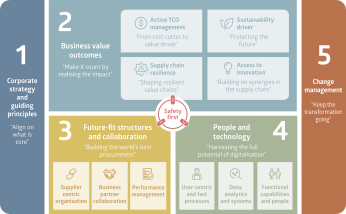
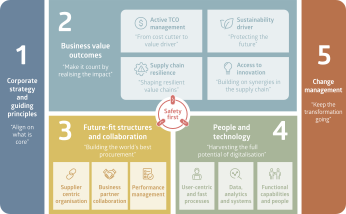
The GPS sets out a framework for strengthening CLP’s supply chain management capability to support its “Power Brighter Tomorrows” vision and match world-class procurement practices. The GPS provides a structured path for the business to deliver value outcomes and is regularly reviewed internally.
The latest version of the GPS, which places a special emphasis on safety across the supply chain, was released in early 2022. Its five dimensions are:
For each dimension, the GPS defines levels of world-class practice from “basic” to “advanced”. Each business unit assesses the level of functional capability it requires to support its business outcomes and then develops a plan to progress from its current level towards more advanced practices.
CLP’s Whistleblowing Policy and Harassment-Free Workplace Policy are also part of CLPʼs procurement operations and CLP encourages all suppliers to uphold the principles outlined in these policies.
The CLP Procurement team actively participates in membership of project steering committees, providing appropriate levels of oversight and governance in procurement decision-making. Procurement commitments in the Company’s various regions are made with reference to the clearly-defined authorities set out in the Company Management Authority Manuals.
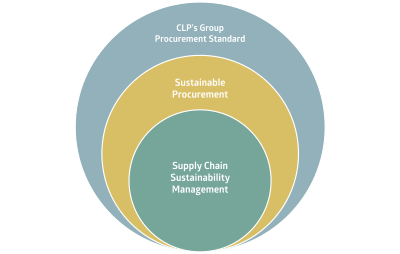
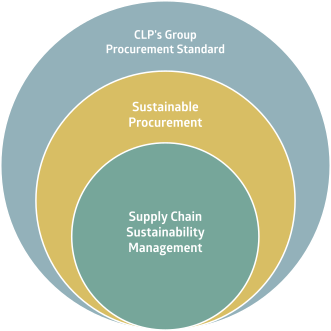
Under the Sustainable Procurement Roadmap, CLP is enhancing its supply chain sustainability management through the implementation of the Sustainable Procurement Framework, which cultivates long term and mutually beneficial relationships with suppliers who share CLP’s values and goals. The framework is underpinned by the CLP Group Procurement Standard (GPS), which guides the Group’s procurement and supply chain management practices.
To enable CLP’s agenda of decarbonisation, building resilience and creating value in the supply chain, the Sustainable Procurement Framework draws on policies that include CLPʼs Value Framework, CLP Procurement Values and Principles and other procurement policies that govern daily CLP operations.
The Sustainable Procurement Framework servers as the foundation of CLP’s supply chain sustainability management activities, including sustainability risk profiling and sustainability assessment. This is helping CLP to manage supply chain risks and communicate its values and principles to suppliers, alongside the SCoC. Overall, the framework enhances CLPʼs competitive advantages by fostering commercially viable strategic relationships with preferred suppliers. It evaluates business value outcomes based on factors such as total cost of ownership management, environmental, social and governance (ESG) value, supply chain resilience and innovation.
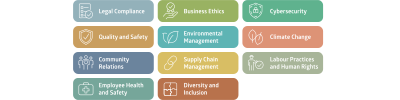
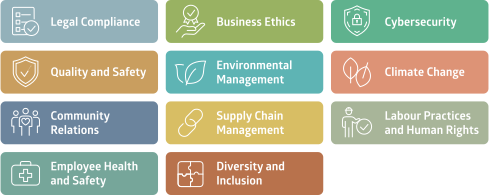
CLPʼs SCoC outlines sustainable procurement practices that support CLP’s environment, social and business objectives in 11 areas:
For each area, the SCoC specifies practices that the supplier must comply with and others that they should work towards achieving. While the SCoC is embedded in CLPʼs tender documents and contracts, the Group also encourages its suppliers to monitor, manage and disclose their performance in accordance with the SCoC. CLP extends similar principles to its own upstream supply chains.
Download CLP’s Supplier Code of ConductEnergyAustralia’s latest SCoC also reflects CLP Group’s sustainable procurement practices. It includes a whistleblowing channel that suppliers may contact directly or raise any concerns with anonymously. The Code has been added to supplier contract templates and to EnergyAustralia Purchase Order Terms and Conditions.
Download EnergyAustraliaʼs Supplier Code of ConductCLP’s sustainable procurement team engages with key internal and external stakeholders to promote procurement practices that reduce ESG risks and enhance the ability of supplier to meet CLP’s sustainability expectations. The Company is striving to shift from a reactive approach of risk mitigation to a proactive approach of advancing opportunities in the strategic sustainability agenda.
The Procurement Leadership Team, comprising each Region’s head of procurement, oversees aggregated future procurement needs, supply market opportunities and risks and the development of procurement strategies. The Group Procurement team has enhanced its in-house capacity by setting up a sustainable procurement team responsible for the planning and implementation of procurement practices relating to sustainability.
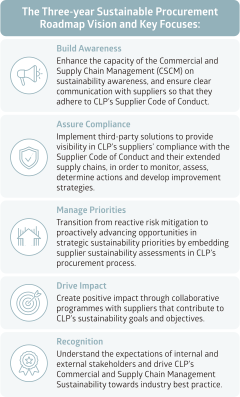
Recognising that sustainability-related risks and impacts within the supply chain directly affect the social licence to operate, CLP is proactively strengthening its approach. As endorsed by the Sustainability Executive Committee, CLP has launched a dedicated three-year Sustainable Procurement Roadmap, strengthening its Sustainable Procurement Framework and enhancing the visibility of its supplier sustainability risk profile. The Roadmap has five key focuses, namely building suppliers’ awareness, assuring suppliers’ compliance, managing priorities, driving positive impact, and gaining stakeholders’ recognition.
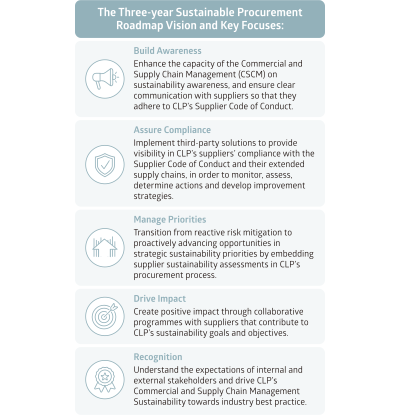
The Sustainable Procurement Programme has been developed to provide CLP with a consolidated view of supplier sustainability risk and opportunity, facilitating well-informed procurement decisions. Implementing the three-year Sustainable Procurement Roadmap is a key component of the Sustainable Procurement Programme. In 2025, the programme made notable progress by embedding ESG principles into CLP’s core procurement processes, with regular updates presented to the Board and CLP’s management for alignment with corporate sustainability goals. The programme includes regular meetings with suppliers and the use of third-party sustainability profiling and ratings to ensure compliance and to enhance suppliers’ awareness of their unique sustainability journeys.
CLP’s supplier sourcing strategies have been developed to ensure suppliers selections are aligned with its business strategies effectively while managing costs, risks and supply continuity. Under the standard procedure, suppliers are selected through a competitive tendering process, in which each supplier’s ability is evaluated according to criteria including quality, health and safety, environmental protection, delivery, innovation, sustainability and cost effectiveness.
Every supplier contract is designed to safeguard the interests of CLP stakeholders and ensure the supplier meets its commitments and obligations in areas such as legal and regulatory compliance, intellectual property rights, data confidentiality and security. CLP segments its contracted suppliers into tiers on an annual basis according to their contract value and potential business impact, taking into account risks relating to supply chain and sustainability factors. This segmentation allows CLP to apply appropriate levels of governance and engagement to different suppliers, thereby enhancing supply chain management efficiency.
CLP also has a risk profiling process to regularly identify and evaluate ESG risks for selected suppliers. This process incorporates responsible procurement practices and considers the following risks:
The risk profiling process helps CLP effectively address ESG considerations across areas such as labour practices, human rights, modern slavery, child labour, harassment, safety, environment, subcontractor management and anti-bribery along the value chain. It provides CLP with insights useful for developing sourcing strategies and risk mitigation measures for strategic suppliers in each category.
During the second year of the Roadmap, CLP began integrating risk profiles into its procurement process, partnering with a third-party platform to monitor supply chain risks. Utilising an ESG profile tool, over 2,000 suppliers have been assessed as High, Medium, or Low risk, with fewer than 1% identified as High risk. Strategic suppliers in the High- and Medium-risk categories undergo further assessments, while those rated as Low risk are continuously monitored for any changes.
In alignment with its Corporate Risk Matrix, CLP actively monitors the risk incidents and risk profile of strategic suppliers with high business criticality and spend value. The risk profiles, which are conducted in conjunction with the supplier risk management and supplier relationship management processes, cover risks related to modern slavery, labour practices, supplier continuity, employee health and safety,.
CLP also routinely reviews past performance data, anticipated business requirements, and technology and innovation roadmaps with its suppliers. Through ongoing operational, business and executive reviews, CLP has continued to enhance its supplier relationship management process for strategic suppliers. These reviews assess the delivery performance of each strategic supplier and facilitate continuous improvement efforts.
In line with its obligations under the Australian Modern Slavery Act 2018, EnergyAustralia submitted its fifth Modern Slavery Statement to the government in 2025. EnergyAustralia continued to use a Supply Chain Risk Management tool, Trust Your Supplier (TYS), which includes questionnaires about employment standards and human rights. All new suppliers must complete the questionnaires and register before being onboarded, while existing suppliers are being invited to register in a wave approach or as updated details are required. The TYS tool provides ongoing risk monitoring for all suppliers using data from an independent third party, which includes data on adverse media, sanctions and regulatory action.
In early 2026, EnergyAustralia plans to launch a refreshed Innovate Reconciliation Action Plan. The plan has a focus on engagement, and involves delivering inititaives co-designed with First Nations peoples at new energy projects, creating employment opportunities through the implementation of our Indigenous employment strategy, and developing an Indigenous procurement strategy to support investment with First Nations businesses.
Through procurement channels, EnergyAustralia fosters First Nations inclusion by including Indigenous participation clauses in its supplier contracts, particularly for contracts relating to generation sites. By doing so, it seeks to encourage its suppliers to help drive indigenous inclusion by increasing their indigenous business spend and employment as well as boosting their cultural awareness.
This year, we continued our partnership with Mob Jobs to deliver Cultural Safety training for leaders of First Nations team members, supporting the implementation of our employment strategy and equipping leaders with practical tools to foster cultural safety, retention, and respectful leadership. Our refreshed Diversity, Equity & Inclusion strategy further strengthens support for First Nations people and advances gender equality to ensure an inclusive and empowering workplace. In addition, our successful Capacity Investment Scheme bids for Wooreen (VIC), Mt Piper (NSW), and Hallett (SA) feature significant co‑design opportunities with local Traditional Owner groups and First Nations communities, ensuring economic, cultural, and environmental benefits are shared locally.
By the end of the year, the procurement team reported that it had sourced goods and services from 12 indigenous suppliers with a total of A$1,374,598 in spending.
CLP utilises a third party sustainability assessment programme that is closely aligned with its risk segmentation framework, and prioritises strategic suppliers that present prominent supply chain sustainability risks. In 2025, a pilot project onboarded selected strategic suppliers of CLP Power and systematically evaluated their sustainability performance and sustainability management systems. Following these assessments, strategies are being developed to drive continuous improvement across key sustainability areas. This data-driven approach is not only enhancing visibility across supply chain sustainability but also enabling targeted engagement with suppliers to address gaps, foster continuous improvement, and build a more resilient and responsible supply chain.
CLP is developing a new Sustainable Supply Chain Finance programme designed to support Hong Kong-based suppliers in their sustainability journeys. This upcoming programme will offer financial incentives for enhancing operational efficiency, promoting environmental stewardship and improving social and governance practices. Beyond financial assistance, the programme will also promote continuous improvement by rewarding progress, encouraging innovation and strengthening collaboration across the supply chain.
CLP regularly conducts workshops for contractors to raise their safety, environmental and labour rights awareness and capabilities. To enhance the professional development of contractor staff, workshops and training on procurement practices and supplier relationship management are conducted regularly.
CLP’s contract terms and conditions include specific sustainability requirements and expectations regarding business ethics. Suppliers are encouraged to align their practices with the requirements and expectations stated in the Supplier Code of Conduct (SCoC) and are expected to adopt similar standards and practices when doing business with the Company. To ensure compliance with the SCoC and further promote sustainable procurement practices, the Company issued a letter from the Director to all suppliers, stating that suppliers must acknowledge the SCoC and be prepared to provide evidence of their adherence to its standards, which might involve submitting accreditations, certifications, sustainability assessments, compliance reviews and audit reports. This initiative has reinforced the Companyʼs commitment to maintaining high ethical and operational standards across its supply chain.
In 2025, the number of CLP’s suppliers that had committed to adhering to the SCoC more than doubled from the previous year, to over 3,800 suppliers. This notable progress reflects the effectiveness of CLP’s ongoing efforts to embed ethical standards and sustainability principles into its procurement processes, ensuring that human rights, fair labour practices and environmental stewardship remain fundamental to CLP’s supply chain management.
CLP places a high value on two-way communication, encouraging direct feedback from its strategic suppliers along with discussions on technology roadmaps and innovation, which are further supporting CLP’s preparations for future challenges. In 2026, CLP plans to host a series of sustainability-themed webinars as part of the Sustainable Procurement roadmap, designed to strengthen awareness and foster collaboration within the supplier community.
A key focus of the Sustainable Procurement programme in 2025 was to enhance awareness among the Commercial & Supply Chain Management (CSCM) team. To support this, a brown bag session was held to enhance the teamʼs knowledge of sustainable procurement in supplier selection, which featured an exchange of best practices with a leading bank institution in Hong Kong. Engagement sessions focused on sustainable procurement are planned with other departments and employees in 2026.
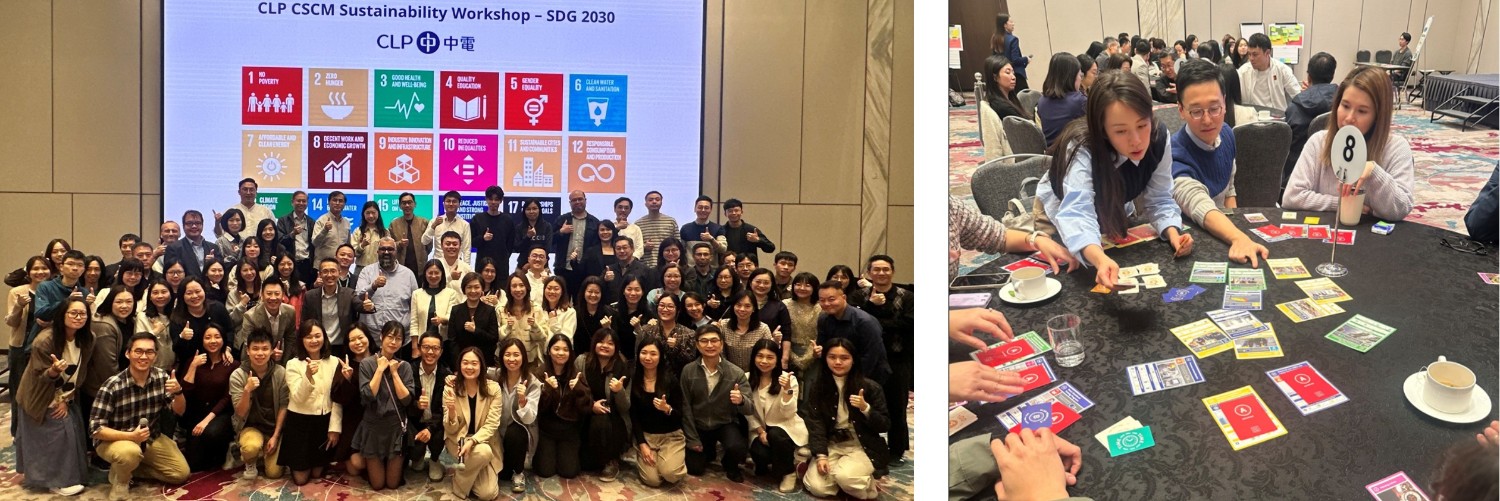
To further equip the CSCM team with skills for managing human rights risks within the supply chain, a Sustainable Development Goal (SDG) 2030 workshop was held for over 80 procurement professionals. The workshop provided valuable insights into why responsible management of human rights is not only a compliance requirement but also a strategic business imperative. By connecting global sustainability objectives to daily procurement decisions, it emphasised the importance of ethical sourcing, fair labour practices, and responsible supplier engagement in fostering long-term business resilience and strengthening brand trust. The initiative encouraged the team to see themselves as agents of change, capable of driving positive social impact while mitigating risks and upholding respect for human rights throughout all tiers of the supply chain.
In 2025, CLP Power also introduced several other initiatives to enhance the management of its supply chain and the associated risks, including:

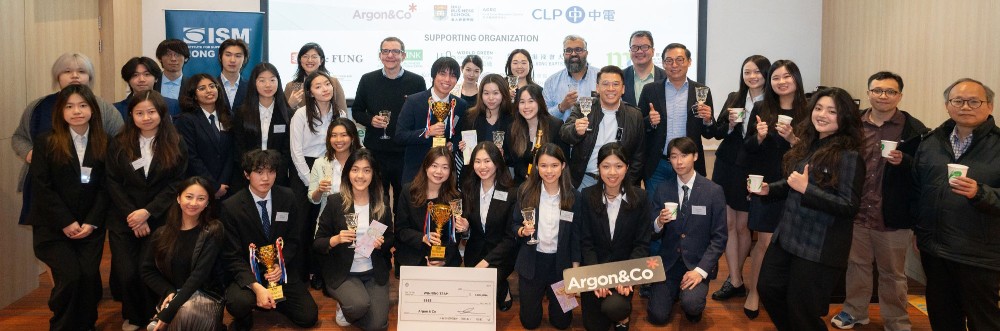
Participants in the CSCM Sustainability Workshop SDG 2030 joined in a group photo after engaging in interactive activities.