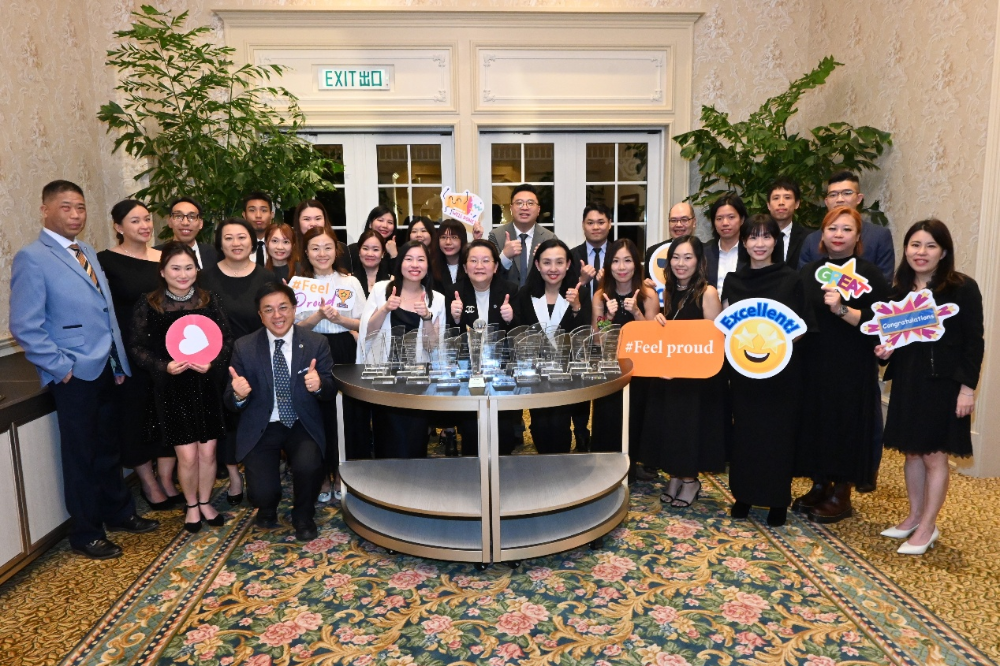
CLP secured an impressive total of 30 accolades at the Contact Center Association of Asia Pacific (CC-APAC) and Hong Kong Customer Contact Association (HKCCA) Awards 2025.
VoltAI is CLP’s own AI-powered concierge, designed to help employees work smarter, faster, and more securely. Beyond its role in enhancing productivity, VoltAI is also a launchpad for CLP’s larger AI ambitions. It offers seamless access to advanced models, reusable AI components and a team of in-house experts, enabling rapid exploration, testing and scaling of innovative solutions that drive business impact.
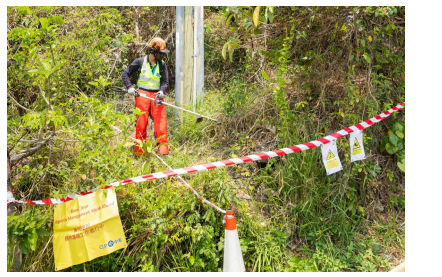
CLP Power Enhances Preparedness for Hill Fire Season
When Hong Kong entered the hill fire season, CLP Power implemented a series of measures to safeguard its power infrastructure and ensure uninterrupted electricity supply, maintaining operational resilience and safe power supply.
CLP is committed to delivering reliable, reasonably priced energy to its customers. By leveraging innovative technologies and customised services, CLP is enhancing customer satisfaction while promoting energy conservation and supporting the adoption of renewable energy. CLP is actively engaging with customers and other stakeholders to address their evolving energy needs and foster strong relationships, while at the same time contributing to sustainability and community wellbeing.
In 2025, the number of customer accounts in Hong Kong increased in all sectors, including residential, commercial, infrastructure and public services, and manufacturing.
CLP Power is the sole electricity provider for Kowloon, the New Territories and most of the outlying islands in Hong Kong. It serves about 2.90 million customers accounting for over 80% of Hong Kong’s households. Total electricity sold in 2025 was 35,760GWh.
Despite its status as a mature market, Hong Kong continues to experience growing demand for electricity. This is largely being driven by territory-wide development and infrastructure projects, new local railway infrastructure projects and new data centres. Hong Kongʼs Northern Metropolis Development Strategy requires highly reliable power supplies in support of this ambitious plan to transform the New Territories into a major urban centre and technology hub.
The number of customer accounts has continued to grow gradually over the last five years, mainly from the residential sector.
2025
2024
2023
2022
2021
Total Hong Kong customers (number)
2,895,398
2,830,411
2,789,644
2,752,071
2,711,421
Residential
2,528,522
2,474,155
2,439,557
2,407,225
2,369,217
Commercial
228,009
218,266
214,616
212,251
210,821
Infrastructure and Public Services
122,248
121,479
118,548
115,404
113,956
Manufacturing
16,619
16,511
16,923
17,191
17,427
EnergyAustralia operates as a retail energy provider, selling electricity and gas to customers in New South Wales, Victoria, South Australia, the Australian Capital Territory and Queensland (electricity only). It is among approximately 30 retailers active in the key markets of New South Wales and Victoria.
CLP calculates the equivalent availability factor for its generation assets in terms of the amount of time that the asset is able to produce full load equivalent electricity over a period, divided by the amount of time in that period. Typical values range from 70% to 90%. CLP aims to maintain an equivalent availability range of 90% and above for its newer assets. For the equivalent availability factor of individual assets, please refer to 2025 Asset Performance Statistics.
Strategies and procedures
While CLP has generation businesses across the Asia-Pacific region, Hong Kong is the only location where its business is vertically integrated, so that it provides generation, transmission and distribution of power as well as retail services. CLP Power is regulated by the Hong Kong SAR Government under the Scheme of Control (SoC) Agreement, which requires the Company to provide a sufficient and reliable electricity supply at a reasonable price and in an environmentally responsible manner.
CLP Power is committed to delivering a secure, reliable, and sustainable electricity supply to meet Hong Kong’s growing energy needs. To achieve this, the company adopts a multi-faceted strategy that combines infrastructure upgrades and maintenance, advanced technologies, and organisational development to enhance operational efficiency. Investment in generation and network facilities ensures sufficient capacity to meet forecast demand and manage both planned and unforeseen outages. Energy security has been further strengthened through the launch of the offshore liquefied natural gas terminal, enabling access to competitive global gas supplies. At the same time, innovative solutions such as Beyond Visual Line of Sight (BVLOS) pilot project, cage drones equipped with Light Detection and Ranging (LiDAR) systems, crawler robots, and a centralised Asset Health Monitoring System have been deployed to enhance operational efficiency, optimise preventive maintenance strategies and inspect overhead lines and towers. Complementary measures, including lightning protection systems, anti-flooding enhancements, and accelerated asset replacement programmes, help safeguard critical infrastructure against environmental risks.
To optimise system performance and prepare for emerging challenges, CLP Power is implementing demand response programmes in selected distribution networks to manage temporary local peak demand and support the integration of electric vehicles and renewable energy systems. Smart grid technologies, such as the Grid-V intelligent management system, enable real-time monitoring of critical assets and operating environments.
Looking ahead, CLP is continuing to pursue innovative projects in robotics, energy storage, video analytics, building information modelling (BIM), and automation, leveraging insights from regional experiences to strengthen its integrated management framework. These efforts are collectively reducing operational risks, enhancing portfolio management, and reinforcing CLP’s commitment to sustainable, reliable energy delivery for Hong Kong.
Effective emergency response and resilience during power outages are supported by close collaboration with government departments, property managers, and key customers. CLP Power also prioritises workforce development, investing in recruitment and training programmes such as the CLP Power Academy. By working with both local and international institutions, the academy prepares electrical and mechanical engineering professionals, ensuring a strong talent pipeline for the future of the power industry.
CLP Powerʼs reliability performance
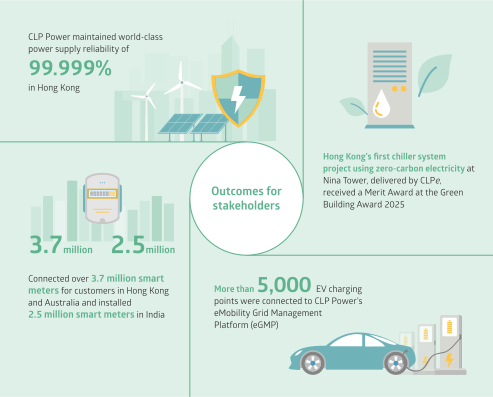
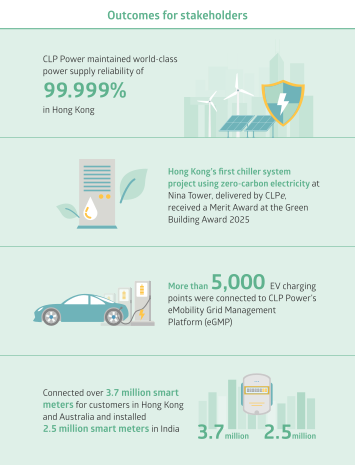
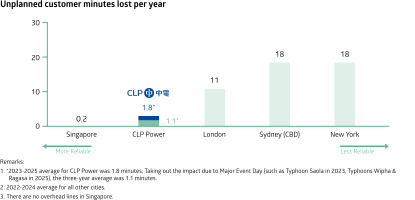
In Hong Kong, CLP Power has maintained its world-class supply reliability of 99.999%, surpassing the reliability performance of other major international cities such as Sydney, London and New York.
CLP Powerʼs transmission and distribution network in Hong Kong serves approximately 80% of the city’s population. At the end of 2025, CLP Power had approximately 17,358 km of circuits at medium or higher voltage. In addition, there were 257 primary and 15,944 secondary substations operating in Hong Kong. As of 2025, the average network loss for the past five years was 3.30%, slightly lower than the five-year average of 3.36% reported in 2024.
CLP Power uses a set of universally recognised supply reliability performance indicators from the Institute of Electrical and Electronics Engineers standard (IEEE 1366-2012) to monitor its system performance. It reports its performance against these indicators quarterly to the Hong Kong SAR Government.
Supply reliability performance indicators and results for CLP Power
Indicator
Result
System Average Interruption Frequency Index (SAIFI)
The average number of supply interruptions for each customer served. Both planned and unplanned interruptions are included.
The three-year average SAIFI (2023–2025) was 0.20, meaning customers experienced a power interruption approximately once in five years during this period. This was lower than last year’s three-year rolling average of 0.26.
System Average Interruption Duration Index (SAIDI)
The average duration of interruptions each customer may encounter in a given year.
The three-year average SAIDI (2023–2025) was 0.23 hour, including both planned and unplanned interruptions. This was lower than last year’s three-year rolling average of 0.30.
Unplanned Customer Minutes Lost (Unplanned CML)
The average duration of unplanned power interruptions per customer in a given year. These outages occur without prior notice and happen as a result of various factors such as weather events, third-party damage to the network and equipment faults.
The three-year average (2023–2025) of unplanned CML was about 1.8 minutes1 , which was lower than last year’s three-year rolling average of 6.0 minutes.
Taking out the impact due to Major Event Day (such as Typhoon Saola in 2023, Typhoons Wipha & Ragasa in 2025), the three-year average was 1.1 minutes.
Careful planning during the project development stage plays a crucial role in determining the operational efficiency or capacity factor range of an asset over its entire lifespan. Projects involving a major asset overhaul must undergo stringent technical and financial scrutiny before commencement.
Monitoring and follow-up
CLP’s customised Group Operations Information System (GOIS) is used to compile operational data on adherence to the Generator Operational Performance Data Standard. It features built-in data collection, a data compilation and approval sequence and a dashboard and reporting functions. Relevant staff at each asset, and at regional and Group levels are responsible for upholding the standard.
On the energy conservation and efficiency front, CLP has continued to strengthen its electricity supply networks and infrastructure to offer high-quality, efficient and reliable electricity in its operating regions. The Company uses innovative technologies and has developed energy management programmes and initiatives through environmental management processes and tools. In CLPʼs major offices, building energy management systems with energy-efficient features have been deployed, with some upgraded with artificial intelligence algorithms to support smart energy control, particularly for air conditioning. Regular energy audits assess energy consumption efficiency and identify opportunities for improvement. CLP Power also sets energy-saving targets with a defined timeline for selected offices. An internal energy use target ensures energy utilisation remains below a reference Energy Utilisation Index (EUI).
Fuel use and energy sent out
In 2025, coal consumption decreased year-on-year while gas consumption remained broadly stable (operational control basis). On an equity plus long-term capacity and energy purchase basis, the electricity sent-out mix continued to evolve: coal’s share declined, while both gas and nuclear contributions increased, demonstrating gasʼ ongoing role in providing flexibility and transition support, alongside continued access to reliable, non-carbon electricity supply.
CLP reports the annual operating performance of those of its generation assets that fall within the reporting scope. The asset performance metrics include availability, energy sent out, thermal efficiency, and energy intensity.
Coal consumption declined by 12% year-on-year, reflecting lower coal-fired utilisation across the portfolio. The reduction was driven by Hong Kong decarbonisation efforts, where coal use declined by 20%, and by lower dispatch and reduced availability in Australia, with coal consumption down by 9%, notably at Mount Piper and Yallourn Power Stations. Gas consumption was broadly flat year-on-year. In Hong Kong, gas use edged down by 1% due to lower local demand and higher nuclear offtake, supported by ongoing efficiency improvements. By contrast, Australia’s gas consumption increased by 18%, consistent with higher dispatch of gas‑fired assets during the year.
Energy sent out by asset type (on an equity plus long-term capacity and energy purchase basis)
CLP continued to deliver electricity from a diversified mix across thermal, nuclear and renewables, generating 77,268 GWh in 2025 on an equity plus long-term capacity and energy purchase basis, 3% lower than 2024. The decrease was primarily driven by a lower coal contribution, reflecting reduced coal-fired utilisation across the portfolio, including Hong Kong’s reduced reliance on coal and weaker coal output in Australia, as well as the exit of coal-fired minority assets on the Chinese Mainland. This was partially offset by higher nuclear offtake in Hong Kong and a modest increase in gas contribution (including the rebound in Australiaʼs Tallawarra following an improved operational profile), with incremental support from renewables and waste‑to‑energy.
Numbers are subject to rounding. Any discrepancies between the total shown and the sum of the amounts listed are due to rounding.
CLP is implementing various initiatives to encourage residential and business customers and the community at large to use energy more efficiently and contribute to environmental protection. They include:
Equipping customers with advanced tools and technical assistance;
Helping customers with ways of unlocking greater energy efficiency;
Offering customers valuable energy insights and practical tips for energy conservation; and
Educating the public through awareness campaigns and informative programmes
Performance targets: Under the current SoC Agreement, targets have been set for supply restoration, energy saved annually, customer services, the CLP Eco Building Fund, Electrical Equipment Upgrade Scheme and Energy Audit.
Peak Demand Management programmes: This enables commercial and industrial (C&I) customers to help lower the overall system demand, reducing the need for investment in new generation units in the long term. The programme leverages artificial intelligence (AI) developed in partnership with Autogrid to help lower demand. The target is to achieve a reduction of up to 60MW from the demand peak.
A five-year energy-saving target: To earn incentives under the SoC Agreement, CLP Power must achieve energy savings of at least 4% on the basis of average annual sales within a fixed five-year period. More incentives can be earned if energy savings reach 5%.
Investing in innovation
In addition to its SoC Agreement obligations, CLP has harnessed its innovation abilities and digital capability to develop a range of customer-facing solutions and energy services.
CLP continues to harness its global open innovation platform to connect solutions to business needs, address operational challenges, enhance efficiency and unlock new business opportunities. Through initiatives such as Free Electrons and the Phoenix scouting programme, CLP collaborates with start-ups worldwide to foster innovation, gain valuable market insights, and conduct risk-mitigated pilot before scale-ups. To strengthen its ability to meet customer needs and effectively navigate the energy transition, CLP also expanded its innovation ecosystem reach by collaborating with Hong Kong Science and Technology Parks Corporation.
CLP is developing technology roadmaps that will identify emerging ideas and technologies that could have significant long-term impacts on both CLPʼs operation and the wider energy transition. CLP has established robust research networks and partnerships with local and international associations, research institutes and universities, and is collaborating on several key projects. Notably, CLP is studying generation decarbonisation and the utilisation of urban flexible load resources to enhance power system flexibility through its Research Fellowship Scheme.
Summary of energy services and solutions
Improving energy efficiency
Products and services
Updates in 2025
Cooling-as-a-Service (CaaS)
Cooling systems are usually a building’s largest source of power consumption. CLPe provides targeted solutions such as chiller retrofitting and replacement services, CaaS and district cooling solutions to enhance energy efficiency and reduce carbon emissions in building complexes. Under the Build-Own-Operate-Transfer model, CLPe will fund, design, construct, operate and maintain the new cooling system over a period of time at an agreed rate.
Hong Kong’s first chiller system project using zero carbon electricity at Nina Tower, delivered by CLPe, received a Merit Award at the Green Building Award 2025 in the Existing Buildings Category (Facilities Management), co-organised by the Hong Kong Green Building Council (HKGBC) and the Professional Green Building Council (PGBC).
In March 2025, CLP was honoured with “Excellent Enterprise” and “New Quality Productivity Innovation” awards at the 2024 Gold Pilot Awards, hosted by the Hong Kong Chamber of Commerce in Guangdong. These accolades recognise its leadership in energy infrastructure and innovative management.
In June 2025, the CaaS project for Pacific Panyu Textiles Limited started commercial operation. The new centralised electricity chiller plant system will reduce 39,473 tonnes of carbon emissions annually.
In March and September 2025, CLPe expanded its CaaS partnership with Henderson Land at Manulife Financial Centre, Metro City Plaza (MCP) and the MOSTown (Phase 5). Upgrades include variable-speed chiller systems and eco-friendly refrigerants at Manulife Financial Centre, improving energy efficiency by over 60%, cutting annual electricity consumption by more than 30%, and saving 2.4 GWh of electricity annually.
In May 2025, CLPe signed a CaaS agreement with Laws Group to replace and upgrade the chiller plant system at its headquarters, Laws Commercial Plaza.
In November 2025, CLPe partnered with OneLink Group to provide CaaS to OneLink Plaza in Yuexiu, Guangzhou. CLPe will finish replacing the property’s aged cooling system with a more energy efficient and environmentally friendly cooling system in May 2026, which will reduce electricity consumption by 46%, equivalent to 768 tonnes of carbon emissions annually.
Solar-as-a-Service (SaaS)
CLPe offers seamless, one-stop services to help customers install and operate solar power systems over a period of time at an agreed rate. Solar photovoltaic (PV) systems convert solar energy into electricity to support energy demand and allow customers to feed electricity back into the grid.
Building on the success of its partnership with Link Real Estate Investment Trust (Link REIT), in 2025 CLPe signed agreements for an additional solar photovoltaic (PV) system, which is scheduled for phased completion by 2027. Upon completion, CLPe’s SaaS model at Link’s premises will represent a significant share of Link REIT’s overall solar capacity. This expansion underscores CLPe’s commitment to accelerating Hong Kong’s transition to clean energy and supporting the adoption of large-scale renewable energy by the property sector.
In March 2025, CLPe completed a 1.3MWp solar PV system at HAECO Hangar 1, making it one of the largest single-site solar energy projects in Hong Kong. This initiative supports the aviation industry’s sustainability objectives by reducing carbon emissions from energy consumption at critical infrastructure sites. Integrating renewable energy into aviation operations is another example of CLPe’s leadership in delivering scalable, sustainable energy solutions across diverse sectors.
In May 2025, CLPe successfully completed the expansion of the Floating Solar PV System at San Tin Polder, increasing its capacity to 351.6 kWp. This was a significant innovation milestone in the deployment of renewable energy. This installation is now the largest floating solar system managed by the Drainage Services Department. The project demonstrates how underutilised water surfaces can be transformed into clean energy sources, contributing to Hong Kong’s decarbonisation goals while optimising land use.
Battery Energy Storage System (BESS) as-a-Service
Tailor-made BESS solutions can greatly improve business performance by providing safe, efficient and secure energy storage. CLPe provides a one-stop design, build and implementation service together with technical and maintenance support, collaborating with its customers over a period of time at an agreed rate, helping develop fully integrated energy storage solutions that meet their specific needs.
In the first quarter of 2025, CLPe expanded its Battery Energy Storage System (BESS) portfolio by introducing two new models—Model Mia and Model Sarah—alongside the existing Model Leanna. This enhanced range offers greater flexibility and supports a wide variety of applications, including special events, roadside projects, and backup power supply. Model Mia features a modular design with separate cabinets for the power conversion system and battery, while Model Sarah allows parallel operation of up to ten units. Both new models are forklift-compatible, ensuring ease of mobility and deployment.
CLPe deployed 43 BESS units as sustainable replacements for diesel generators across seven National Games1 competition venues from September to December 2025, for provision of power for temporary outdoor facilities and broadcasting vans. In addition to technical support, CLPe offered service assistance to the Electrical and Mechanical Services Department (EMSD), covering BESS electrical installation, testing and commissioning, monitoring and maintenance, and on-site standby support.
CLPe also supported the operation of the BIM CAVE—a mobile mixed reality space designed to deliver lifelike virtual simulations for construction site safety training by deploying its most compact BESS, Model Sarah. This enhanced the mobility of the training facility, enabling deployment across multiple sites and offering flexible and immersive learning experiences. In collaboration with Hip Hing Construction Company Limited, this innovation earned CLPe recognition in the Service & Solution category at the prestigious International Innovation Awards. The accolade highlights CLPeʼs shared commitment to advancing construction safety through technology.
CLPe deployed more than 100 BESS units (using all three models) at construction sites in Hong Kong in 2025, compared with 94 units in 2024. This expansion delivered an estimated reduction of over 4,500 tonnes of carbon emissions, representing a 75% decrease compared with conventional diesel-powered operations. These achievements underscore CLPe’s dedication to sustainability and innovation in energy solutions.
The 15th National Games, the 12th National Games for Persons with Disabilities and the 9th National Special Olympic Games.
Improving energy efficiency
Products and services
Updates in 2025
Energy efficiency improvement for buildings
CLP Eco Building Fund: The fund provides subsidies for energy efficiency improvement works for residential, C&I buildings.
CLP Electrical Equipment Upgrade Scheme: The scheme provides subsidies to C&I customers, especially SMEs, to replace or upgrade their lighting and air-conditioners to more energy-efficient models.
The CLP Eco Building Fund provides HK$100 million a year to subsidise improvement works for a target number of 400 residential blocks and C&I buildings to enhance the energy efficiency of their communal areas. The initiative aims to save 48GWh of energy annually. In 2025, customers saved around 48GWh of electricity from over 600 buildings.
Since the launch of the CLP Electrical Equipment Upgrade Scheme in 2019, over HK$180 million in subsidies has been offered to C&I customers for replacing or upgrading their electrical equipment to more energy-efficient models.
Energy efficiency improvement for businesses
CLP Power works in partnership with different businesses and offer flexible and innovative smart solutions to them.
CLP Power partnered with Chinachem Group to develop a "5G-powered Cooling Load Prediction System for Sustainable Shopping Malls". Successfully deployed at Nina Mall, the system integrates 5G technology, AI, and big data analytics to forecast cooling demand and optimise air conditioning performance. This innovation has improved comfort levels while achieving an estimated-annual energy savings of 675,000 kWh and recovering investment cost within one year, showcasing the effectiveness of smart energy solutions in driving decarbonisation. The project was internationally recognised with a Gold Medal at the International Exhibition of Inventions Geneva, underscoring its innovation and impact.
CLP Power worked closely with Hong Kong Disneyland Resort to advance energy efficiency and sustainability across the resort area. Key initiatives included upgrading to high-efficiency lighting, installing over 7,900 solar panels that generate 3.6 million kWh of electricity annually, and introducing the resort’s first all-electric Halal kitchen to provide sustainable dining options. This successful collaboration not only reduced carbon emissions and enhanced operational efficiency but also earned international recognition, with the project receiving the Corporate Energy Management Runner-Up – International Award from the Association of Energy Engineers.
Peak demand management
Demand Response programmes are offered to C&I and selected residential customers in Hong Kong to lower overall system demand, reducing the need to invest in new generation units.
EnergyAustralia’s PowerResponse includes a residential demand response programme and a contracted demand response programme for commercial customers.
In Hong Kong, CLP Power achieved cuts in demand of around 249MW and 77MW from residential and C&I customers respectively in 2025.
EnergyAustralia’s PowerResponse has a current contracted capacity of 543MW involving over 615,000 household customers and 700 business and large industrial customers.
Energy management technology
Launched in 2019, CLP’s Smart Energy Connect (SEC)ʼs solutions cover the entire value chain from energy supply to energy consumption, and include innovations for carbon-free energy, grid modernisation, power storage, EVs, building energy management and carbon offsetting.
A mass rollout of smart meters to all CLP Power customers, from 2018 to 2025, is supporting Hong Kong’s Smart City transformation.
Since 2018, CLP Power has connected more than 2.88 million smart meters for its residential and SME customers, promoting smarter electricity use, low-carbon living, and enhancing safety and reliability of the power supply. In 2025, CLP Power completed the territory-wide replacement of conventional electricity meters with smart meters for its residential and SME customers.
As of 31 December 2025, EnergyAustralia had approximately 916,000 smart meters installed for its customers across Australia. It entered into the Legacy Meter Replacement Plan (LMRP) in December 2025, which aims to replace all basic meters by the end of 2030, increasing the total number of smart meters to over 1.8 million.
Energy audits
CLP Power provides free energy audits and various consulting services to C&I customers to help them understand their energy needs and identify opportunities to reduce their energy use and hence their operating costs.
In 2025, CLP Power helped its C&I customers save around 48GWh of electricity with more than 600 energy audits completed.
A Memorandum of Understanding (MoU) was signed with Hang Seng Bank in August 2025. The collaboration enables corporate clients under Hang Seng Bank’s Sustainability Power Up Fund to further explore CLP Power’s services including energy audits and the Smart Energy Online (SEO) platform. Hang Seng Bank complements this by providing sustainable financing solutions to support the clients’ transition to low-carbon operations.
Energy data and analytics
At EnergyAustralia, PurchasePro is a self-service web portal which allows business customers to purchase an agreed load progressively rather than commit to a price at a single point in time.
Smart Energy Online (SEO) is an online assessment and management tool for C&I customers in Hong Kong.
At EnergyAustralia, major C&I customers can opt for the PurchasePro product suite, which offers a more direct way of managing energy market exposure, giving customers control over when to transact in the Australian electricity futures market, and the ability to purchase Swaps, Caps through the portal and, as of 2025, Renewable PPAs through engagement with their Account Executive.
EnergyAustralia’s Large Market customers can review their consumption and cost information through ‘MyAccount’, provided by our Large Market billing provider.
SEO is another key tool that enables business customers to monitor and analyse their energy usage. The SEO user base had increased to over 2,800 C&I customers at the end of 2025, more than 12% more than in 2024, reflecting growing adoption among C&I customers.
To foster broader collaboration, CLP Power signed an MoU with the Vocational Training Council (VTC) in July 2025 to promote energy efficiency through energy‑saving projects and the training of energy management professionals. VTC will leverage CLP’s SEO platform at some sites to monitor and manage energy use more effectively.
CLP Retro-Commissioning and Retrofitting Charter Programme
CLP Power offers free retro-commissioning and retrofitting training courses, comprising classroom trainings and field visits for energy management employees and engineers who already have a basic understanding of retro-commissioning and retrofitting.
The training covers advanced topics and techniques such as data analysis, system diagnosis, measurement and verification.
In 2025, CLP Power allocated HK$1 million to launch the CLP Retro-Commissioning and Retrofitting Charter Programme. The Programme aims to encourage C&I customers to retrofit and decarbonise their existing premises to achieve greater energy efficiency and lower operating costs in the long run.
Using electricity more widely for transport industry
Products and services
Updates in 2025
Electric Vehicle Charging-as-a-Service (EV CaaS)
EV CaaS is a one-stop fleet charging offering that enables fleet customers to enjoy flexibility in their electrification journey while saving capital investments related to charging infrastructure and software. CLPe will invest, design, build, operate and maintain EV CaaS charging solutions in their own or other premises over a period of time at an agreed rate.
EV CaaS also includes the development of CLPe’s Public Charging Network for use by private users and corporate/business customers.
The CLP Charge Point Operator platform and EV driver app were launched in 2023. Both are the core foundations of the EV charging business.
In 2025, CLPe signed EV CaaS contracts with key customers across multiple segments, including schools, taxi operators, and transportation service providers. These agreements enable customers to electrify their fleets without heavy upfront investment, offering predictable costs and operational flexibility.
CLPe is actively supporting taxi fleet licence holders by providing charging services for electric taxis. In addition, contracts have been signed with traditional taxi licence holders to accommodate the growing number of electric taxis in Hong Kong.
As part of its commitment to Hong Kong’s electrification journey, CLPe delivered in-depot charging infrastructure and solutions to a local NGO and coordinated with relevant parties to determine suitable charger locations for their electric minibuses. Beyond bespoke solutions, CLPe’s public charging network grew significantly in 2025, comprising over 300 charging bays across more than 35 locations under CLPe management.
To further strengthen its network, CLPe secured two strategic sites:
Lantau Charging Station: provides Southbound and local drivers with access to convenient and fast GB/T (China standard) and CCS2 (European stanadard) charging services.
Tai Po EV Charging Station: transforms a former petrol filling station site into an EV charging station and operates it for a 12-year land lease term.
Additionally, CLPe secured a deal to install and operate chargers at a newly built development on Hong Kong Island, adding a substantial number of DC and AC chargers in a prime location.
The CLPe Charging mobile app continued to grow its user base in 2025, introducing new features tailored to target users. For example, taxi drivers can now self-register using their licence for verification, unlocking access to taxi-specific promotions and offers. The app complements CLPe’s pay-as-you-go charging service, providing convenience and flexibility for individual users.
For fleet operators, CLPe offers subscription-based contracts with committed usage over agreed periods at fixed rates. Customers pay a monthly all-inclusive fee that covers EV charging costs, reducing investment costs, asset constraints and manpower requirements. Additional benefits include 24-hour customer support and a cloud management platform, enabling operators to manage their fleets, adjust operational needs and monitor real-time charging facility availability and EV charging status, complete with electricity consumption data.
Electric vehicle infrastructure
CLP Power continues to support green motoring and electrification of vehicles in Hong Kong – a long-term government policy objective set out in the Hong Kong Roadmap on Popularisation of Electric Vehicles and its updated version.
CLPe provides EV charging solutions to meet private and commercial users’ charging needs. Its subsidiary, Smart Charge (HK) Limited, a joint venture established with HKT in 2016, provides one-stop EV charging service for residential customers.
In Australia, EnergyAustralia has outlined plans to support the transport industry with vehicle electrification by working with EV manufacturers, fleet operators and their customers to plan and build the charging infrastructure they need.
CLP Power fully supports the Hong Kong SAR Government’s Fast Charger Incentive Scheme which earmarks HK$300 million to subsidise the installation of public fast chargers. To support its implementation, CLP Power has conducted preliminary power assessments across its supply areas and identified around 8,000 potential locations for fast charger installation. This information serves as a reference for EV market stakeholders and charging service operators, enabling more effective planning and deployment of fast chargers.
CLP Power is also collaborating with the Hong Kong SAR Government and petrol station operators to convert over 50 petrol stations into an EV fast charging network.
CLPe operates over 900 charging bays, and Smart Charge has designed, installed, and currently manages EV charging infrastructure across residential car parks in Hong Kong, covering more than 13,300 parking bays.
CLP Power introduced the Electric Vehicle Residential Time of Use Tariff in May 2025 offering discounted energy charges during off-peak hours to encourage smart charging. More than 5,000 applications had been received by year-end.
In 2025, EnergyAustralia continued to roll out a commercial green transport package to support its business and C&I customers (primarily fleet customers such as bus depots), involving EV charging systems to power their fleets. EnergyAustralia aims to help its customers further decarbonise by powering some of their operations with solar and battery systems, and participating in the Virtual Power Plant (VPP). Construction of the first depot electrification site was completed in 2025 (Tropic Wings Cairns Tours & Charters, Hartley Street, Bungalow, Queensland), and included a grid upgrade, a BESS and seven EV chargers.
Ship-to-Ship Liquefied Natural Gas (LNG) Bunkering as a Service
Following the release of the Hong Kong Government’s Action Plan on Green Maritime Fuel Bunkering, CLPe has partnered with China National Offshore Oil Company Guangdong Water Transport Clean Energy Company Limited (CNOOC) to provide LNG fuel bunkering services in Hong Kong.
Delivered Hong Kong’s first ship-to-ship LNG bunkering with simultaneous cargo operations, supplying 10,000 cubic metres of LNG—the largest single ship-to-ship LNG bunkering operation in Hong Kong to date. This milestone strengthens Hong Kong’s position as a green marine fuel hub and supports decarbonisation of shipping.
CLPe is committed to supporting the decarbonisation of the maritime industry by strengthening its LNG bunkering supply capabilities, and is collaborating with CNOOC, which has an established and extensive presence on the Chinese Mainland’s LNG bunkering market.
LNG bunkering enables shipping operators to reduce greenhouse gas emissions by up to 20% compared with conventional marine fuel, contributing to Hong Kong’s 2050 carbon neutrality goal and CLP’s commitment to low-carbon energy solutions.
Enabling zero-carbon electricity supply
Products and services
Updates in 2025
Decentralised renewable energy/rooftop solar
CLP offers feed-in tariffs for its customers, in support of energy decentralisation and renewable energy.
The Feed-in Tariff (FiT) Scheme in Hong Kong enables customers to earn FiT payments by installing a renewable energy system on their premises and connecting the system to the CLP grid.
The array of decentralised generation products has expanded in Australia to now include residential rooftop solar and batteries, community batteries, and support for the 150MW VPP.
From the commencement of the FiT Scheme in mid-2018 to the end of 2025, CLP Power received over 28,605 applications. Approximately 95% of the applications, representing a total capacity of about 450MW, equivalent to the annual electricity usage of more than 100,000 residential customers, have been approved. About 25,859 applications have been completed and connected to the grid.
EnergyAustralia continue to expand the bring-your-own battery VPP product (“Battery Ease”) as part of the growing Behind the Meter portfolio to provide opportunities for residential customers who have already invested in residential batteries to lower their energy bills during peak periods and manage peak price events. For customers without rooftop space, a community battery product was also launched so that more customers can take part in Australia’s decarbonisation journey.
Corporate Power Purchasing Agreements (PPAs)
Businesses wishing to increase the direct renewable energy available to them may elect to enter PPAs with CLP. PPAs provide customers with the most credible and efficient clean energy available.
There has been continued interest in the direct purchase of renewables, whether via annual purchasing or 24/7 granular matching. In response to this positive market momentum, CLP is leveraging its expertise in renewable energy assets, battery storage and energy management indicators to support its corporate customers.
In January 2025, CLP China signed power purchase agreements with companies such as Linde, Envision and K.Wah Construction Materials, and started a supplier programme with an existing client to support the adoption of renewable energy in Jiangsu and Yunnan provinces. CLP will provide renewable energy to corporates from its solar and wind projects in Yunnan and Jiangsu provinces.As one of the largest external investors in the energy sector on the Chinese Mainland, CLP focuses on developing clean and renewable energy and providing green energy solutions to corporate customers. The agreements will contribute to the corporate goal of achieving net-zero carbon emissions by 2060, and accelerate the low-carbon energy transformation of the Chinese Mainland.
Offsetting emission that cannot be otherwise avoided
Products and services
Updates in 2025
Energy attribute certificates (EACs)
CLP offers a range of EACs to support customersʼ decarbonisation objectives. In Hong Kong, Renewable Energy Certificates (RECs) offer an alternative way for customers to support local clean energy generation. Each unit of a REC represents the environmental attributes of electricity produced by local renewable energy sources, generated or purchased by CLP Power.
On the Chinese Mainland, CLP China’s renewable assets issue Green Electricity Certificates (GECs) which are the only officially recognised renewable energy certificates on the Chinese Mainland. They can be used to meet obligations under the Chinese Mainland’s mandatory Renewable Energy Portfolio Standard, or to support voluntary green power trading.
In Australia, EACs serve as an option to reduce customersʼ Scope 2 emissions when decentralised renewables are not a viable option. For example PureEnergy from EnergyAustralia helps customers support the production of renewable electricity from government accredited renewable sources.
In 2025, around 363GWh units of RECs were sold.
CLP China’s wind and solar projects are eligible to apply for and issue GECs that can be traded through the market. For example, the Qian’an III Wind Power Station in Jilin province transfers GECs to a multinational data centre client in Ningxia province.
Around 13,791 EnergyAustralia customers have chosen a GreenPower government accredited PureEnergy option for their electricity supply.
Carbon Credits
Carbon credits represent carbon emissions avoided as a result of emissions reduction projects. CLP encourages its customers and corporates to purchase these carbon credits to offset their unavoidable emissions.
In addition to selling carbon credits, CLP also collaborates with many industries to deliver carbon offset initiatives.
CLP published a carbon credit brochure, which provides a clear and concise overview of carbon credits, explaining the benefits and processes involved. By simplifying its presentation, CLP hopes to enhance engagement and ensure that all relevant details are easily available to those interested in CLP’s carbon credit initiatives.
CLP continues to promote carbon offsetting and support its customers’ decarbonisation journeys. Customers can offset their unavoidable emissions with CLP Carbon Credits Customers can offset their unavoidable emissions with CLP Carbon Credits after taking actions to reduce their emissions. In 2025, Apraava Energy sold over 2 million tCO2e units of offsets from its renewable generation assets to customers around the world.
EnergyAustralia recognises that high integrity carbon offsets have an important role to play in the energy transition and the achievement of Net Zero. The use of such high integrity offsets, having regard to best practice guidance, will be required to mitigate residual emissions associated with achieving Net Zero for Scope 3 by 2050. In the context of EnergyAustralia’s Tallawarra B project, Australian Carbon Credit Units are currently being used to offset its Scope 1 emissions.
EnergyAustralia is required to report data breaches in any case of unauthorised access to, unauthorised disclosure of, or loss of personal information held by EnergyAustralia, if this is likely to result in serious harm to one or more individuals and if EnergyAustralia has been unable to prevent the likely risk of serious harm with remedial action. Notifications must be made to the Office of the Australian Information Commissioner (OAIC) and to the affected customers with a description of the data breach, the kinds of information involved and recommendations for customer action in response to the data breach.
In May 2018, the Australian Government announced that energy data would be included in the Consumer Data Right (CDR). The sharing of product data in the energy sector commenced on 1 October 2022 and consumer data sharing commenced on 15 November 2022. It gives customers the right to share certain transaction, usage and product data relating to their electricity accounts with EnergyAustralia (a ‘data holderʼ) with authorised parties (‘data recipientsʼ) under the CDR regime. These data recipients are then able to compare what other electricity offers may better suit the customer’s needs. EnergyAustralia was granted an exemption by the Australian Competition and Consumer Commission (ACCC) from the original commencement date in November 2022, requiring EnergyAustralia to commence CDR data sharing by 15 May 2023.
By 15 May 2023, EnergyAustralia successfully went live as a CDR ‘data holder’, meaning EnergyAustralia is now able to share information required under the CDR regime for most of its eligible residential, small business and large business customers. EnergyAustralia continues to refine its CDR data sharing platform as it receives feedback and enquiries from customers or other CDR participants. As of 30 April 2025, EnergyAustralia has operationalised capability to comply with CDR for certain innovative and trial products such as ‘Solar Home Bundle’.
Strategy and procedures
The CLP Privacy Principles set out the Company’s commitment to protecting personal data and its approach to doing so. CLP has a designated Corporate Data Protection Officer who oversees governance of the personal data management of CLPʼs Hong Kong business operations. Their contact details can be found on CLP’s CLP Privacy Policy Statement.
The Group safeguards the confidentiality of the personal data provided to it in accordance with the CLP Privacy Policy Statement,
which took effect from 1 November 2018. The statement lays out the Company’s approach to protecting personal data, and is applicable to everyone across its Hong Kong operations who handles personal data. All employees who have to handle or process personal data of any individual for business operations in Hong Kong must follow CLP procedures, practices and local regulations in relation to personal data privacy.
The CLP Personal Data Protection Compliance Manual sets out CLP’s data protection compliance framework, including its governance structure and the roles and responsibilities of different functions and personnel within it. All business units with operations in Hong Kong must implement and abide by this manual, which also provides guidance on the use and protection of personal data. Policies and procedures regarding privacy and data protection are further embedded in CLPʼs Code of Conduct and its compliance management procedures.
Under the Code of Conduct, CLP commits to compliance with all laws and regulations and with the Companyʼs own policies and procedures, including the data privacy laws and the CLP Data Protection Compliance Manual. The Code of Conduct stipulates that anyone found violating the Code will be subject to disciplinary action. CLP’s internal audit function appraises compliance with policies and procedures, and evaluates the effectiveness of the overall controls, in accordance with normal audit cycles and assessment scopes. In addition, suppliers are informed of and are expected to comply with the data privacy laws outlined in CLP’s Supplier Code of Conduct.
Monitoring and follow-up
CLP monitors and documents any complaints related to breaches of customer privacy and the loss of customer data. In addition to adhering to the CLP Personal Data Protection Compliance Manual, the Customer Success and Experience Business Unit has adopted a written guideline for handling customer data incidents. The guideline includes information about classifying and assessing the scope and severity of data incidents, about reporting roles and responsibilities, and it includes an incident response strategy and checklist. The Corporate Data Protection Officer also retains a record of data incidents and any follow-up actions.
EnergyAustralia has a Data Breach Response Plan, and a Data Breach Response Team responsible for implementing it. The plan includes information about assessing, managing, containing and reporting data breaches within required timeframes and outlines relevant roles and responsibilities. The plan is activated whenever a potential data breach is identified.
To help prevent unauthorised disclosures of customer data to malicious attackers or impersonators, CLP carries out activities to raise staff awareness of the relevant risks. These include communications and quality assurance assessment and coaching and additional training for frontline staff. It also conducts Company-wide communications, employee training and briefing sessions with leadership to ensure all staff understand current privacy and data management obligations. A Data Breach Response Plan has been formulated and a Data Breach Response Team established to ensure the business has the capability and the procedures in place to respond swiftly to any such incidents.
A compulsory e-learning programme on data protection is given to all new employees, and is periodically mandated for all employees to refresh their knowledge. CLP also runs frequent tailored data protection awareness programmes, which include regular briefings, case sharing, quizzes and refresher activities, for employees who have regular interaction with protected data (such as members of the Legal Review Committee and frontline staff). Industry threats are continuously reviewed with a view to strengthening controls over the management and monitoring of networks, systems and mobile devices, data loss and suspicious cyber activities. CLP also regularly emphasises the importance of reporting potential privacy incidents in a timely manner.
At EnergyAustralia, briefing sessions on customer privacy include leadership, enterprise-wide communications and employee training to ensure all staff are up to date with current privacy and data management policies and practices. Privacy training is a compulsory requirement for all new employees and subsequent refresher training is provided to all employees annually.
Under Australiaʼs Privacy Act 1988 (Privacy Act), EnergyAustralia has obligations to ensure the appropriate collection, use, disclosure and security as well as access to individualsʼ own personal information. There are also mandatory data breach reporting obligations in relation to Notifiable Data Breaches. EnergyAustralia is required to report data breaches if there are any unauthorised access to, unauthorised disclosure of, or loss of personal information that EnergyAustralia holds where this is likely to result in serious harm to one or more individuals and it has been unable to prevent the likely risk of serious harm with remedial action.
As was reported last year, on 28 November 2024, the Australian Parliament passed the first set of amendments to the Privacy Act to create a statutory tort for serious invasions of privacy and provide the privacy regulator with additional rights to enforce penalties for breaches of privacy. The amendments also created a new obligation for EnergyAustralia to ensure that individuals are informed about situations where automated decision-making (ADM) ‘could reasonably be expected to significantly affect the rights and interests of an individual’. The timeline for compliance with the ADM transparency requirements is two years. EnergyAustralia is continuing to develop its plans for complying with the ADM requirements and monitoring for any new changes and developments that are announced.
In 2025, no cases of customer data loss were reported by CLP Power in Hong Kong, one case was reported by EnergyAustralia to the Office of Australian Information Commissioner which involved potentially fraudulent activity by a third party.
CLP provides customers with information about its products and services through various communication channels, including the email welcome pack sent to new customers, the CLP Power websites and the CLP Mobile App, as well as the EnergyAustralia websites and Mobile Apps. CLP also engages with its residential, commercial and industrial customers through satisfaction surveys, online service portals, site visits to its assets, account manager support and through its Customer Service Centres and Customer Interaction Centre.
CLP strives to respond effectively to customer needs and preferences. All escalated cases are studied thoroughly to ensure issues raised by customers are appropriately resolved.
Monitoring and follow-up
In Hong Kong, an external market research consultant conducts an annual telephone survey to measure customer satisfaction. The customer satisfaction score considers overall satisfaction towards CLP and includes a relative rating comparing CLP to an ideal utility in Hong Kong. The score is benchmarked against the public utilities in the energy sector and other public service organisations.
EnergyAustralia counts the number of calls and complaints it receives and measures customer satisfaction through its Strategic Net Promoter Score (SNPS). Customer satisfaction is measured monthly via an online NPS survey sent to a representative group of customers. The Transactional Net Promoter Score (TNPS) is also used to track customer satisfaction in relation to specific customer interactions, providing more direct feedback to frontline staff.
CLP Power’s customer satisfaction score remained stable in 2025 and is on a par with other public service organisations.
Australia
EnergyAustralia’s strong dedication to handling customer complaints is reflected in its consistent focus on timely engagement, effective communication, and personalised support. This commitment to continuous improvement in complaint resolution is reflected in a Transactional Net Promoter Score of 37.9, underscoring the organisation’s unwavering priority to put customers first and deliver reliable, high‑quality service across all touchpoints.
In 2025, total complaint volumes increased by 3% compared to 2024, with Ombudsman escalations decreasing by 11% year-on-year. This reflects a higher proportion of issues being identified and resolved internally through more timely and direct customer engagement.
The marginal increase in internal complaints was due to enquiries relating to the expiry of a benefit plan, with customers seeking clarification on changes to discounts and rates upon the planʼs expiry. These cases were managed through clear and consistent communication, ensuring customers received accurate information and appropriate resolutions.
TNPS slightly decreased to 37.9 from 2024, but it still demonstrates a continued focus on addressing customer concerns quickly and effectively, reducing the need for further escalations through early engagement in the customer journey.
Since 2024, the scope of the Transactional Net Promoter Score has been revised to include Digital Net Promoter Score in order to reflect customers' digital experience.
With global AI adoption rapidly increasing and new regulations such as the emergence of the European Union’s AI Act, CLP recognised the need for proactive governance to mitigate risks and build trust in the safe, ethical and transparent use of AI.
Strategies and procedures
The CLP AI Policy establishes the governance framework and structures required for responsible AI use across the Group. The policy clearly defines what constitutes AI, explains the need for governance, and sets expectations for all stakeholders. The policy outlines accountability, escalation points, and reporting structures to ensure informed oversight by the Group Executive Committee and the Board as well as to define how risks are identified, assessed, monitored, and reported at both the use case and business unit levels, using the Group AI Risk Taxonomy in line with the Group Risk Matrix. In addition, the policy provides practical guidance including actionable do’s and don’ts, human oversight requirements, transparency measures such as AI disclaimers, and standards for multimedia development to mitigate risks like deepfakes.
CLP has formal structures in place to assess AI risks. All AI use cases undergo formal assessments across the deployment life cycle, which evaluate factors such as ethical use, data privacy, and human oversight to ensure responsible implementation. AI assessments are also included in procurement workflows, to ensure that external suppliers and solutions meet CLP’s AI standards. These AI assessments extend to existing solutions that introduce new or incremental AI features.
CLP has also established principles for internal teams and external vendors producing AI-generated content, to ensure responsible, ethical and consistent practices.
These efforts enable CLP to balance innovation with robust governance and controls in adopting AI solutions or instruments.
Personal Productivity: Over half of the employee population has adopted CLP’s internal AI platform, VoltAI, to accelerate routine tasks, undertake document translation, and improve knowledge sharing. This has resulted in a 30% reduction in data security risks and measurable gains in operational efficiency.
Low-Code/Self-Built Solutions: Colleagues are provided with Copilot Studio and targeted coaching to enable the development of AI solutions to address work challenges. Ten AI agents have been created, reflecting robust AI adoption in the business units. Examples built by the business units include the Operations Instructions Chatbot by Generation Business Group (GBG), the AI Engineer by Power Systems Business Group (PSBG), the Privacy Impact Assessment Assistant by Group Legal Affairs, and the Process Chatbot by Group Internal Audit.
Pro-Code Environments: Advanced users leverage enterprise-grade AI instruments to develop sophisticated solutions. Live Agent Assist, Email Agent, Complaint Agent and Training Agent are examples of AI agents developed by the Customer Success and Experience (CSE) team using the AI Foundation instruments, supported by CLP Digital. In another example, CLP Digital has built a knowledge retrieval chatbot capable of processing thousands of schematic diagrams in addition to textual data, simplifying knowledge search for GBG engineers analysing assets.
Operational Technology (OT): the hardware and software that monitors or controls physical devices (such as turbines) belonging to CLP.
Information Technology (IT): the technology used to store, retrieve, transmit and process data or information.
CLPʼs cybersecurity management follows international cybersecurity frameworks, and includes setting guidelines for selecting and implementing security controls to mitigate cyberattack risks. To comply with local regulations, some Regional/Business Units have developed their own documents that align with both local requirements and Group Securityʼs 20 baseline standards.
Training and awareness
The Groupʼs employees are its first line of cybersecurity defence, and need to know how they can protect themselves and the Company from cyberattacks.
CLP makes continual efforts to raise cybersecurity awareness among employees and encourage them to adopt good cybersecurity practices. Security awareness activities include simulated phishing emails, internal broadcast campaigns, briefings, road shows and videos.
Monitoring and follow-up
CLP continually monitors its IT and OT systems and networks, staying alert for potential threats. Advances in cybersecurity technologies have helped improve the Groupʼs ability to prevent, detect, react and recover from cybersecurity incidents in both the IT and OT network environments.
The Security Operations Centre (SOC) has refined its operations and accelerated its incident response capability. Employees are reminded regularly to report suspicious cyber activity directly to CLP Group Security via various channels, and suspicious emails can be automatically reported with the click of a button.
The Group-wide cybersecurity strategy, structured around an internationally recognised cybersecurity framework, is also being refreshed to align with business objectives and regulatory changes. It is incorporating lessons learned from Red Team exercises, a maturity assessment, and audits. In addition, both Hong Kong and the Chinese Mainland have introduced additional laws to strengthen the security of computer systems and data. On the Chinese Mainland, the Regulations on Network Data Security Management came into effect on 1 January 2025, providing a structured and operational framework for safeguarding network data. In Hong Kong, the Protection of Critical Infrastructure (Computer Systems) Ordinance (Cap. 653) took effect on 1 January 2026 and aims to enhance the computer system security of critical infrastructure to minimise the potential for cyber disruption or compromise of such services.
At CLP, strong data security, infrastructure protection, and cybersecurity remain key priorities. While compliance with these laws has not required significant financial investment, our businesses have taken this opportunity to conduct a comprehensive review of existing processes and implement enhancements, including the establishment by Group Security of a dedicated task force which reviewed the requirements and coordinated the action required to meet the new regulatory obligations. In addition, cybersecurity-related standards are regularly updated to take into account technological advances, changing legislation and emerging standards of good practice.
To strengthen resilience, the Security Architecture Team has developed and implemented a Security-by-Design framework that enables streamlined, risk-based decision-making for cybersecurity throughout the entire project lifecycle.
Across the Group, we have continued to test the resilience of CLP’s assets and sites, working with the relevant business units to help them apply appropriate controls and measures to protect people, equipment and information.
CLP’s Red Team simulates real-world cyber attacks and then works with business units to assist with remediating the findings and addressing vulnerabilities. The Risk Assessment Team helps the business understand how threat actors can exploit weaknesses to compromise the confidentiality, integrity or availability of data, and offers mitigation options to bring risks within acceptable levels.
Finally, security awareness of cyber threats has been enhanced by the introduction of a next-generation phishing simulation and reporting tool, as well as a comprehensive programme of webinars, broadcasts and training sessions.
The Group Security Policy addresses the following areas:
Integrated and centralised organisation and governance – CLP has an integrated, enterprise-wide Group Security function within Group Digital with visibility and skillsets to cover all relevant lines of activity in CLP, providing security support to all areas of the business.
Policies, standards and guidelines – CLP applies policies, standards, guidelines, procedures and processes to manage and monitor the organisationʼs regulatory, legal, risk, environmental and operational requirements in line with recognised industry standards.
Understanding the threat – CLP ensures decisions related to the application of security measures are appropriately informed and, wherever possible, intelligence driven.
Communications and awareness – CLP looks to continuously enhance the security awareness and knowledge of its employees and contractors, with the objective of encouraging positive security behaviour.
Technical domain – CLP ensures that robust operational security protocols are developed, applied and maintained, and that wherever possible these are “best-in-class”.
Liaison – CLP maintains constructive and trusted security relationships with relevant government agencies and industry bodies to ensure speedy and effective cooperation when the need arises.
The Group Security team was established to ensure that CLP’s cyber and physical security capabilities and efforts complement each other, and gives CLP in-house capabilities across the full range of security skillsets. Regular reports are provided by Group Security to the Board’s Audit & Risk Committee (ARC), providing assurance that adequate risk management is in place and that appropriate remedial action is being taken where needed.
The Company also maintains its duty of care by providing employees with travel security guidance and a security support service.
CLP has developed a body of standards and guidelines to assist all regions and regional assets in establishing or revising their security management documentation. These are aligned with international standards for security and lay out best practices from across the Group. They include:
The CLP Physical Security Standard: Lays down the minimum standard of physical security measures expected at every asset owned or operated by CLP, regardless of location or role.
The CLP Physical Security Guideline: Provides practical guidance on the security requirements expected of all business units, in line with the Group Security Policy and Physical Security Standard. For instance, it includes guidelines on how to identify potential areas of weakness, develop appropriate security countermeasures and prepare a security response plan.
The CLP Security Vulnerability Assessment Guideline: A flagship document that lays down the process for evaluating the security status of any CLP site. Applied in close collaboration with the operator, it provides a comprehensive security health check using a risk-based approach that covers threats and areas of weakness and offers solutions.
CLP’s Security Due Diligence for Project Design and Construction or Site Acquisition: Developed to support projects in the early stages of acquisition or construction. All projects and acquisitions undergo this due diligence process, regardless of size.
The CLP Business Travel Risk Management Plan: Minimises the security, medical and health risks faced by employees engaged in business travel. On behalf of the Group, the Security team in CLP Digital leads on business travel security in close cooperation with Group HR and Group Finance.
Training and awareness
CLP security staff must always comply with CLP’s Code of Conduct. They receive related training on an annual basis. In addition to training on national regulations and site-specific requirements, contract security staff receive induction training on CLP policies relating to a harassment-free workplace, minimum wage guidelines and measures preventing discrimination in the workplace. They must complete this induction training before being granted access to their assigned workplace sites.
Regular travel security awareness briefings and associated materials are available for anyone engaged in business travel.
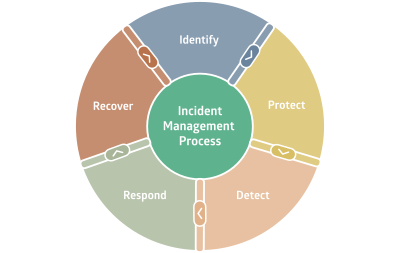
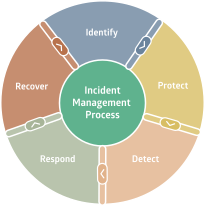
CLP maintains robust and regularly tested emergency response and crisis management procedures. As the first line of defence, the Incident Management Process (shown below) is activated whenever any incident arises.
CLP incident management process
Crisis Management Plan
CLP’s Group Crisis Management Plan ensures high levels of preparedness in responding to and recovering from emergency situations and helps minimise disruption to customers. The Plan is continually being reviewed and enhanced to ensure it remains in line with operational changes and the broader operating context. It provides a strong platform for effectively handling any crisis at the Group level. The plan:
Outlines crisis management organisation, roles, responsibilities, procedures and processes;
Specifies the tools needed to ensure the collective response is well planned, well executed and fully integrated across the organisation;
Describes the relationship and interface between the handling of regional- and Group-level crises; and
Details the processes that govern internal and external communications during emergencies and crises, ensuring that those responsible for managing a crisis have the necessary information to carry out their responsibilities and that key stakeholders are informed.
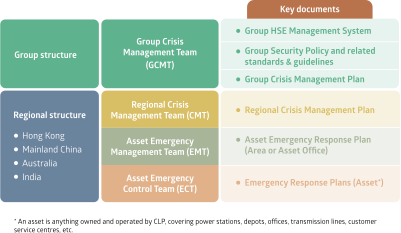
The Group-level plan is supported at the regional level by Regional Crisis Management Plans which mirror the Group document but are tailored for each region. In addition, detailed emergency response plans have been developed for each asset. These plans are designed to be used by first responders and asset managers.
CLP’s Crisis Management & Emergency Response Structure is outlined in the diagram below.
As specified in both Group and regional publications, emergency response drills are conducted at least annually at all Group sites, with smaller scale drills taking place more often. Group and Regional Crisis Management Plans are reviewed at least every three years. Regional crisis management exercises are conducted annually as part of the internal peer review process.
Reviewing procedures and arranging training and exercises to ensure our crisis management team members are familiar with the new requirements of the Protection of Critical Infrastructures (Computer Systems) Ordinance, which takes effect from 1 January 2026;
Coordinating and conducting periodic crisis management exercises to ensure that all members fully understand their roles and responsibilities and are adequately prepared to execute them during an actual incident;
Integrating a computer software (CCB 2.0) with the Advanced Distribution Management System (ADMS) to enable real-time data access during crisis management for rapid decision making and effective resources allocation; and
Reviewing the Group’s Business Continuity Plans to incorporate new scenarios and reflect changes, ensuring their alignment with emerging risks and new regulatory requirements.
Preparedness to tackle during extreme weather events
CLP has strengthened safeguards, enhanced monitoring and increased contingency measures to ensure its electricity supply systems remain safe and highly reliable during extreme weather events.
In Hong Kong, overhead lines make up over 30% of CLP Power’s transmission network. These are more susceptible to adverse weather, lightning strikes and external interferences such as fallen trees that could affect power supply reliability.
CLP Power stepped up inspections of the power supply equipment in the network ahead of typhoon season, using helicopters and drones to examine transmission towers and overhead cables and pruning trees that could interfere with overhead lines. Floodgates have been installed at substations at risk of flooding during severe weather and emergency drills conducted to ensure staff’s readiness to respond swiftly and effectively to typhoon and storm impacts.
Extreme weather events could also result in voltage dips and power interruptions, bringing inconvenience to customers. CLP Power’s System Control Centre closely monitors grid operations throughout typhoons and storms, and emergency teams and additional personnel are dispatched promptly where necessary to restore power to affected customers.
CLP Power’s 24-hour Customer Service Hotline service has been bolstered to enhance responsiveness during extreme weather events. CLP Power also maintains close coordination with relevant government departments and communities across its supply area during typhoons or power incidents to facilitate timely responses and coordinate power restoration efforts.
In 2025, Hong Kong experienced a record-breaking 14 typhoons, including two No. 10 hurricane signals issued under Super Typhoon Ragasa and Typhoon Wipha. Five instances of black rainstorms were also recorded in July and August. Despite the extreme weather, CLP Power’s power supply system maintained a high overall performance, demonstrating the effectiveness of our preparedness efforts.
CLP has also implemented a range of measures across the Group’s value chain to strengthen its resilience to climate change, tailored to different geographies, asset types and locations, as summarised in the table below.
Relevant part of the value chain
Climate-related adaptation measures
Transmission and distribution
To address extreme heat and increased temperature:
Have operational guidelines in place that consider operations under high temperatures (of up to 45°C)
To address flooding:
Conduct flooding assessments for intensified heavy rain scenarios and carry out mitigation measures for new and existing substations.
To address tropical storms:
Continue reinforcement of transmission overhead line tower structures.
Strengthen foundations of transmission towers, and stabilise the nearby slopes.
Enhance automatic detection and isolation of faulty sections of distribution overhead line circuits, and use smart meter supply interruption data to proactively contact customers and prioritise recovery.
Implement predictive vegetation management to minimise risk from overgrown vegetation.
Retail
Provide necessary support to customers directly impacted by extreme weather events through business continuity planning.
Through engagement events, CLP communicates with customers the climate adaptation initiatives that have been implemented to enhance system resilience and reliability.
Condition monitoring and service recovery
Install online condition monitoring systems for switchgear and transformers to allow real-time monitoring and detection of incipient fault conditions.
Develop an intelligent management system (Grid-V) that can enhance management of key power facilities, identify potential risks in the environment in real time, and issue alerts to engineers.
Enact emergency management procedures and response plans across all operations, and conduct regular drills.
Establish a typhoon response protocol and coordination system. Conduct regular drills and post-typhoon reviews to ensure smooth execution of contingency plans.
Utilise the CLP Power System Control Centre, which provides round-the-clock surveillance of network status, to enable prompt mobilisation during power outages.
Utilise the emergency restoration system, enabling rapid construction of temporary masts to expedite restoration of 400kV overhead line circuits.
Enhance the communication capabilities of customer service teams, with a particular focus on post-incident customer communications.
Establish an in-house small unmanned aircraft team with BVLOS pilot project drones for inspecting overhead lines and towers.
Provide reserve capacity, fuel switching or power import in case of emergency via the CLP Business Continuity Plan.
We use cookies for the purpose of enhancing your user experience and helping us better understand how the site is used. By continuing to visit this site, you agree to our Use of Cookies.